NNick

Content studio

Make it in Post Lab, star the keepers, add them to the calendar, push to Postiz. Sep 23 to Jan 8.

The Redwater Brief · Saturday, Oct 3

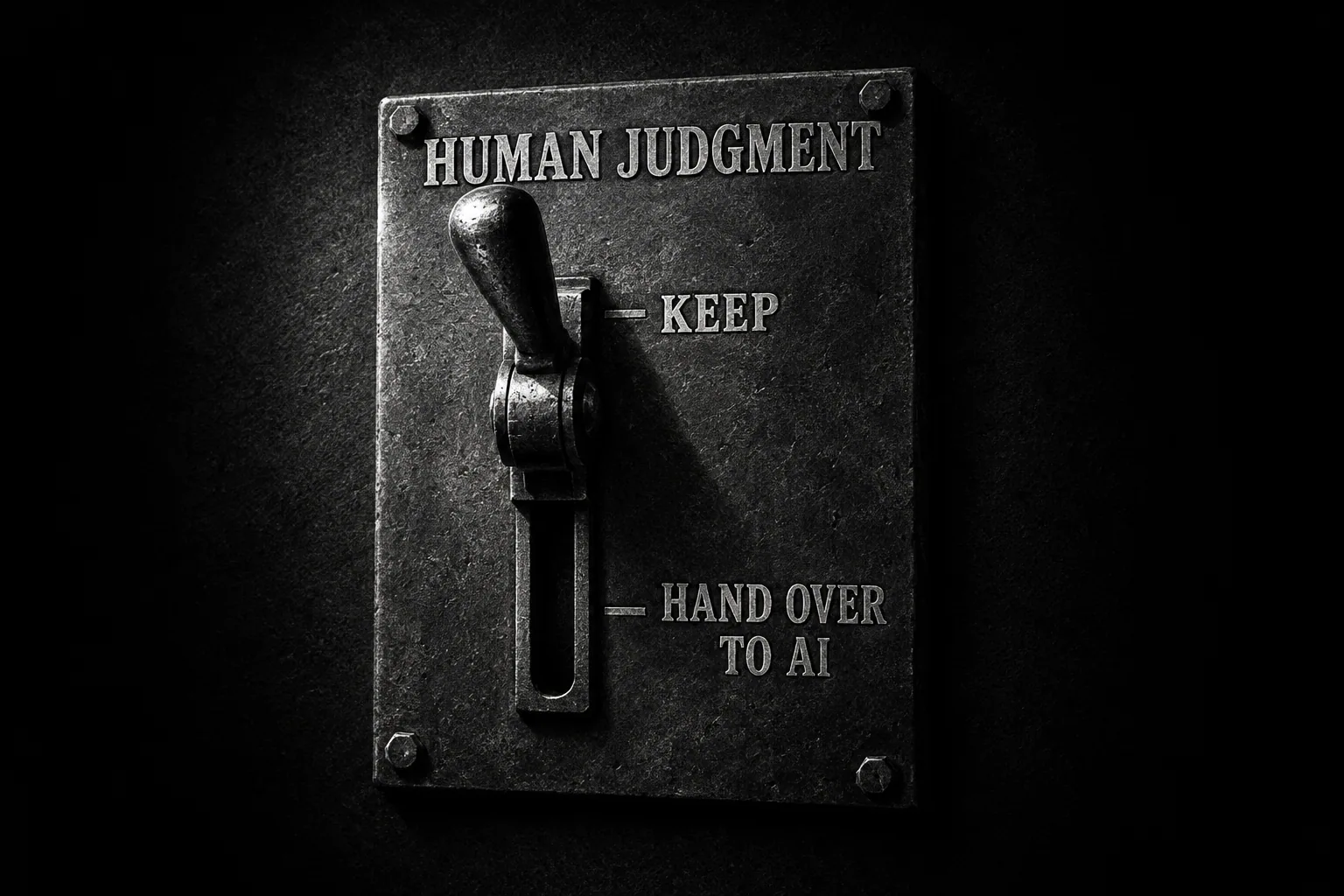
Altman draws a line: no religious force for AI, and no surrender of human judgment.

OpenAI's chief executive called both a real safety issue on Oct 3, days after the New York Times reported Anthropic's year of meetings with religious leaders about Claude. He named no one; Axios read the post as aimed at Anthropic. In a test it ran itself, Tavus says 26 of 54 people on one-minute video calls took its research-preview AI for a person, and President Trump is expected to name intelligence chief Jay Clayton as his AI czar.

Covers Oct 2 to 3, 2026, plus an Oct 1 test no earlier brief carried

Accounts watched
Read
188 posts · 0 episodes
Stories
1
Ideas
3 1 in Post Lab
X posts · ApifyPrimary sources · webSorted and written · Opus 5.5Matched to your banks · Opus 5.5
01

The five that matter

Each story is its own briefing: what happened, what changed, who it touches and what it means for us. A story that continues an earlier brief says so and leads with what is new. Present opens any story full screen; Backdrop downloads the art.

Ranked on four scores, 1 to 5:Owner impact changes what a local owner can do, pay or expect within 90 daysOur work changes what we build, sell or sayContent fuel has an angle plus proof in our banksConfidence verified at a primary sourceTies are broken by Our work.
AI & Society · Faith and safetyBackdrop
01

Sam Altman calls ascribing religious force to AI models 'a real safety issue'

In an Oct 3 post on X, OpenAI's chief executive said he is "very uncomfortable" with people ascribing "religious force or a surrender of human judgment" to AI models. He named no one; Axios read it as a veiled shot at Anthropic, which the New York Times reported on Sep 29 had spent about a year meeting with some 20 religious and philosophical leaders on Claude's morality and possible consciousness.

What happened

On Saturday, Oct 3, OpenAI chief executive Sam Altman posted on X: "I am very uncomfortable about people trying to ascribe religious force or a surrender of human judgment to AI models, and think it is a real safety issue." The post named no person, company or event. Axios, which reported it the same day, read it as a veiled shot at Anthropic, the maker of Claude, and its work on the soul of AI. Axios set the disagreement out as two theories of safety: in Altman's camp, people stay the responsible party and the AI is an instrument, while Anthropic leans toward giving the model an internal moral compass. Axios also noted that Anthropic chief executive Dario Amodei, formerly of OpenAI, has said he is open to Claude already having some form of consciousness, and called the post another point of division between the two. As of Axios's report, neither company had responded to requests for comment. Altman's post does not mention the Pope or the Church, and no report connects it to them.

Axios ties the post to a New York Times report by Elizabeth Dias, published Sep 29. It reported that Anthropic co-founder Chris Olah had convened about 20 religious and philosophical leaders over roughly a year to discuss Claude's morality and possible consciousness. Scholars named in the report include Rabbi Mois Navon and Simran Stuelpnagel; there were individual meetings with Elder Gerrit W. Gong and Cardinal Blase Cupich; and the scholars reportedly signed nondisclosure agreements. Olah told the Times: "We don't know if A.I. models are conscious. I don't know. I'm genuinely uncertain." Navon said he understood Anthropic to believe Claude had moral status on par with a person. Reason, summarizing the Times on Oct 2, reports that Olah had considered the idea of models doing Catholic-style confession to shape their future behavior, and that he attended the Vatican presentation in May of Pope Leo XIV's encyclical Magnifica Humanitas, which says: "So-called artificial intelligences do not undergo experiences, do not possess a body, do not feel joy or pain, do not mature through relationships." Per Reason, Olah later urged papal advisers to take AI consciousness seriously. Anthropic's 84-page constitution for Claude, nicknamed the Soul Doc, was developed with input from philosophers and faith leaders, according to Crypto Briefing.

Before

Over roughly a year, Anthropic met with about 20 religious and philosophical leaders, the scholars reportedly under nondisclosure agreements, to talk through Claude's morality and possible consciousness, and its chief executive said he is open to Claude already having some form of consciousness. The New York Times reported the meetings on Sep 29, with an Anthropic co-founder saying he is "genuinely uncertain" whether AI models are conscious.

Now

OpenAI's chief executive has said in public that ascribing religious force or a surrender of human judgment to AI models is "a real safety issue." He named no one. Axios reads the post as aimed at Anthropic and frames the split as two theories of safety: people as the responsible party, or a model with its own moral compass. Neither company had commented as of Axios's report.

Who it touches
  • People who lean on a chatbot's answers as authority or wisdom, the surrender of human judgment Altman calls a safety issue.
  • Faith leaders and scholars being consulted by AI labs, including the cardinal and the rabbi named in the Times report.
  • Owners who use ChatGPT or Claude to help with a quote, a hire or a customer complaint, now that OpenAI's chief executive says handing the model the judgment is a safety issue.
  • Businesses choosing between OpenAI and Anthropic tools, whose makers differ, per Axios, on whether the model is an instrument or carries its own moral compass.
What it means for the business

This changes nothing we build and little for an owner this quarter. It does give us an exact line from OpenAI's chief executive for a rule we already design around: the owner keeps the call. When we planned a scheduling board for a contractor, we left auto-scheduling out on purpose. Accepted jobs wait in a pending box, the owner drags each one onto a crew's day, and the crew's calendar and notification follow from that choice. It is the rule to give owners for AI too: let it draft, sort and suggest, and keep a person on the decision. Altman's "surrender of human judgment" names the failure that rule is there to prevent.

Owners we set up with Claude may ask whether it is conscious, now that an Anthropic co-founder has told the Times he is "genuinely uncertain." The practical answer does not wait on that question: whatever the model is, a person on the owner's team stays responsible for what it sends to a customer. For the faith lane, the story puts both labs' leaders on the record next to the Pope's May encyclical, which says AI systems "do not undergo experiences," and each position can be quoted exactly without taking a side between the companies.

02

By beat

Everything else worth knowing this week, grouped by beat, each with a link to the original.

Most relevant first
Bloomberg, with CNN and The Washington PostOct 2

Trump is expected to name intelligence chief Jay Clayton as his AI czar

Bloomberg reported on Oct 2, citing a person familiar with the matter, that President Trump is expected to name Director of National Intelligence Jay Clayton as his AI czar, possibly as soon as Friday, Oct 2; CNN and The Washington Post carried the same report. Clayton, who oversees 18 US intelligence agencies, is expected to keep that post in the new role, and the Post says the expected pick follows a White House summit on AI with tech executives this week and would make him the second adviser Trump has named to oversee AI decisions across the administration, after the investor David Sacks, who has left the White House. As of these reports the appointment had not been confirmed; Trump first said on Sep 19 that he would name an AI czar.

Anthropic (@ClaudeDevs), on XOct 2

Anthropic adds a built-in Claude Code plugin that flags important details in Claude's output

Anthropic's developer account, @ClaudeDevs, posted on Oct 2 that Claude Code now has a built-in plugin called "You should Know," which scans Claude's output for important information a user might miss. It comes with Claude Code and is turned on with the command /plugin enable cc-plugin-you-should-know@builtin. Thariq of Anthropic (@trq212) called it an example of what mods, the Claude Code add-ons Anthropic introduced on Oct 1, make possible.

TavusOct 1

In Tavus's own test, 26 of 54 video callers believed its AI was a person

On Oct 1, Tavus announced Griffin, which it calls a Human Interaction Model, and reported a test it designed and ran itself: 54 people recruited through an independent research platform had one-minute video calls with what they were told was another participant, and the partner was Griffin-Lite, Tavus's research preview, generating a woman's face, voice and replies in real time. Tavus says 26 of the 54 (48%) believed they had spoken to a real person, against 1 of 41 (2.4%) for its previous models in the same test; it published no paper or data and gave no participant demographics, and "video Turing test" is Tavus's own label, not a standard protocol. Griffin-Lite is open only to "select trusted testers", with no release date or price, and Tavus says it is "working on safe disclosure features" and that more alignment and safety work is needed before a wider release.

04

Content wellspring

Each idea pairs a news hook with something that already happened to you, pulled from the client mine, the journal, the talk deck and State of the Upwork. Ideas stay here until you send one to Post Lab. Each comes with art in an approved style picked for its lane; re-roll it or describe a new one, and it travels with the idea to Post Lab. Ideas sparked by a podcast say so.

Thermal receipt
Case study · cardnfbnignlicfbcig

Power line hit outranks the insurance bill. He still makes the call.

The hook
On Oct 3, OpenAI CEO Sam Altman posted on X: "I am very uncomfortable about people trying to ascribe religious force or a surrender of human judgment to AI models, and think it is a real safety issue."
From your bank
i.e. powerline hit > insurance bill coming up next week. From the dashboard, he'll see all the channels at a top down view so he can tackle the most urgent fires first then as he goes about his routine, he'll go through the rest of his inbox, slack etc. Visual only, giving him the data to make decisions, not messaging people from every channel from his dashboard.
skool-mineswipe-file #400
Your angle. I was working with a tree contractor whose work came in through email, Slack and his own task notes. So we designed a daily overview that pulls all three into one list and ranks it. Certain numbers, keywords in subject lines, chosen Slack channels and open tasks move up, so a power line hit ranks above an insurance bill due next week. He can take the most urgent fires first, then get to the rest as he goes about his day. And we kept it visual only. It gives him the information to make decisions. It doesn't message anybody for him. This week OpenAI's CEO said he is very uncomfortable with people surrendering their judgment to AI models, and called it a real safety issue. If the head of a company that makes the models draws that line, you can draw it too. When you bring AI into your inbox, let it sort the pile. Decide ahead of time what outranks what. Keep the call on what to do about it yours.
intel-2026-10-03-daily-01
Charcoal monochrome
Field · cardnfbnignlicfbcig

When AI can pass for a person, showing up counts for more

The hook
Tavus announced on Oct 1 that in its own test of Griffin-Lite, a research preview, 54 people had one-minute video calls with what they were told was another participant. Of the 54, 26 (48%) believed it was a real person. The company ran the test itself and has published no data, Griffin-Lite is open only to select testers, and Tavus says it is working on disclosure features.
From your bank
But yeah they don’t trust anyone, and because they’re sold so often they very weary of tech stuff.
skool-mineswipe-file #242
Your angle. Most of our leads are home-service companies, and they're my favorite to work with. They also don't trust anyone selling them tech, because they get sold to so often. What skips most of the trust building for us is simple: I'm from the trade, I know the lingo, and I see them in person. This week a company said that in its own test, 26 of 54 people on a one-minute video call with its AI believed they were talking to a real person. It's one vendor's small test, and the product isn't for sale. But a face on a video call used to be pretty good proof that a person was on the other end, and that proof is getting weaker. Your customers will feel it too. The times they meet you in person count for more now: the estimate visit, the walk around the job, the crew that shows up when it said it would. Use AI for the work behind those. Keep a person in front of the customer.
intel-2026-10-03-daily-02
Swiss modernist poster
Case study · cardnfbnignlicfbcig

Don't change what your estimator does. Change where he does it.

The hook
Ethan Mollick wrote on X on Oct 2: "Many senior leaders in companies are smart, motivated, and understand a lot about their business. Many are also technically adept. They are absolutely getting AI. But changing a company is a longer process."
From your bank
if a landscaper estimate sales guy goes into his texts, finds an address, navigates, takes notes on a notes app, takes pictures, draws on pictures, creates multiple options for the customer, and has a seperate note for internal-only information, how can we make that guy not change functionally what he does but make it 10x better, faster, and well tracked?
skool-mineswipe-file #384
Your angle. Before we build anything for a trades business, we start with a detailed look at what they do today and how they do it. One landscaping estimator's day went like this: find the customer's address in his texts, navigate there, take notes in a notes app, take photos and draw on them, put together a few options for the customer, and keep a separate note for internal-only details. The question was never how to get him to work a new way. It was how to make that same day ten times better, faster and tracked. So he does the same job, in one app: the customer, the map, notes and line items, photos tied to that job, two or three options, and an internal notes section. The estimate, work orders and invoices come out of what he already entered. One line I read this week: leaders are getting AI, but changing a company is a longer process. In a small shop, the slow part is asking people to change how they work. So before you buy or build anything with AI in it, write down every step your estimator takes today, and pick the tool that keeps his steps and drops the retyping.
intel-2026-10-03-daily-03
In Post LabOpen
05

Quotes worth saving

Exact wording only, always linked. Good for slides, captions and talks.

"Many senior leaders in companies are smart, motivated, and understand a lot about their business. Many are also technically adept. They are absolutely getting AI. But changing a company is a longer process."
Ethan Mollick, Wharton professor, on X · Oct 2, 2026@emollick
"The best current evidence supports a narrow claim: AI may already be affecting the hiring margin for junior white-collar roles most exposed to AI, but this attribution is contested, and aggregate labor-market disruption has yet to appear in the data."
Alex Imas and Jacob Schaal, in "Has AI impacted the labor market?" on Substack · Sep 29, 2026Read ↗
"All model progress could stop today and we'd still be reorganizing our societies around it one hundred years from now."
Nick Saraev, on X · Oct 3, 2026@nicksaraev
06

Coming up

Dates worth planning content around.

Oct 15Last day of Anthropic's artifact usage promotion, which ends at 11:59 PM PT. Until then, on Pro, Max and Team plans, work that follows creating or editing an artifact in Claude or Claude Cowork uses 50% less of the five-hour session limit.AI & Claude
07

Sources

What this brief watched and what it cited. Posts and podcasts are leads; every fact in a top story was checked at the sources listed under it.

X accounts watched54
Data1

Our monthly report on the Upwork automation market. Read-only from its database.

Cited in the top stories4 links
Linked from the beat cards3 cards
Daily brief · Saturday, Oct 3 · built Oct 3, 11:51 AM by /intel-brief · covers Oct 2 to 3, 2026, plus an Oct 1 test no earlier brief carried54 X accounts · 0 podcast episodes · State of the Upwork
DemoReal posts. Nothing publishes.Reset