NNick

Content studio

Make it in Post Lab, star the keepers, add them to the calendar, push to Postiz. Sep 23 to Jan 8.

The Redwater Brief · Thursday, Oct 1

OpenAI signed up to teach owners AI. Hormozi told his staff to make it pay.

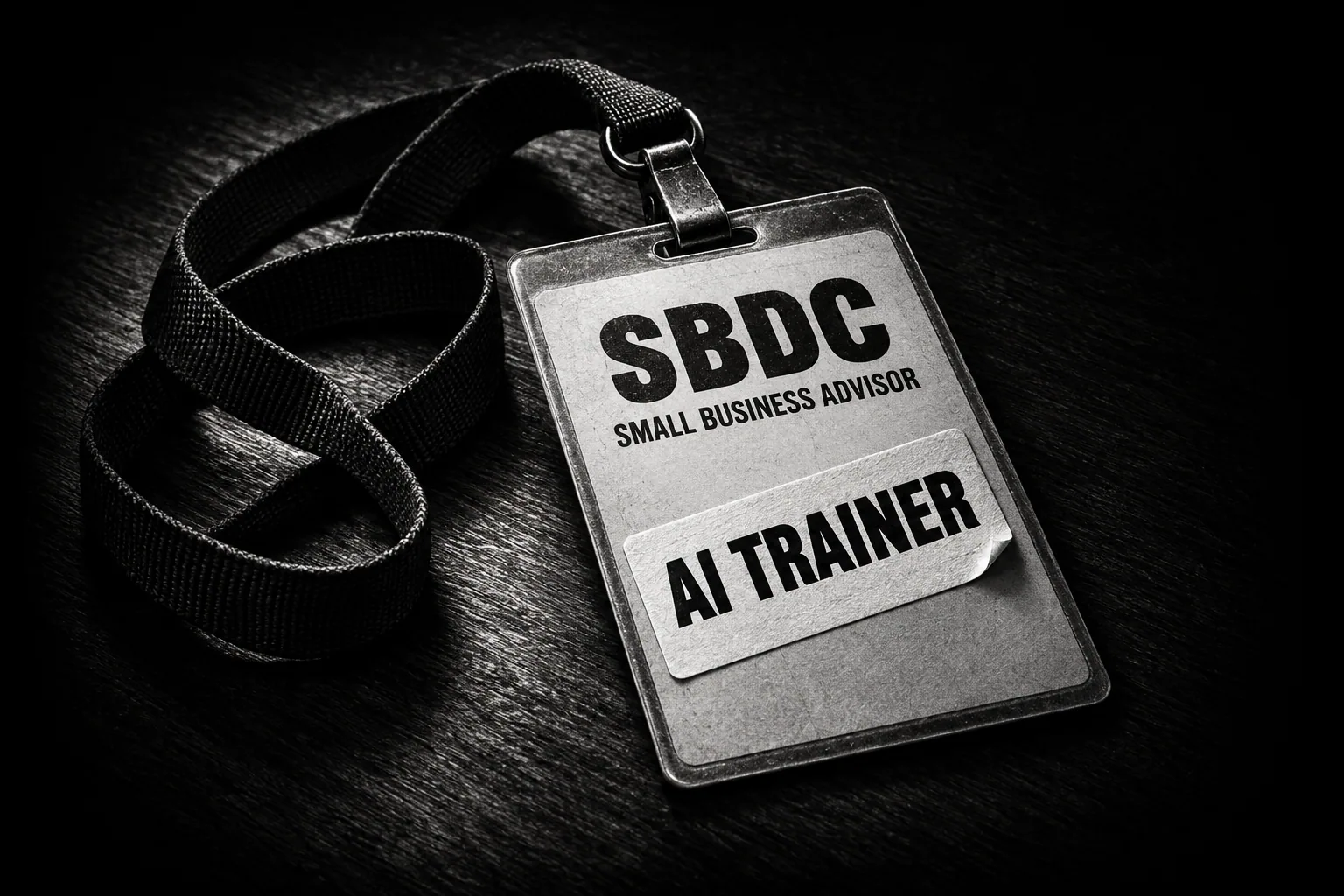
OpenAI and America's SBDC announced on Sep 30 a plan to train about 150 small business advisors to teach AI in person, reaching at least 1,000 businesses with free ChatGPT Plus for those who finish, two weeks after Anthropic announced its own workshop tour. The same day, Alex Hormozi posted a memo to his staff capping AI budgets, saying revenue had stayed flat while AI use climbed. Google released Gemini 4 Argon, its new frontier model, but only to vetted cyber defenders for now.

Covers Sep 30 to Oct 1, 2026

Accounts watched
Read
133 posts · 1 episodes
Stories
2
Ideas
4 2 in Post Lab
X posts · ApifyStacked transcripts · yt-dlpPrimary sources · webSorted and written · Opus 5.5Matched to your banks · Opus 5.5
01

The five that matter

Each story is its own briefing: what happened, what changed, who it touches and what it means for us. A story that continues an earlier brief says so and leads with what is new. Present opens any story full screen; Backdrop downloads the art.

Ranked on four scores, 1 to 5:Owner impact changes what a local owner can do, pay or expect within 90 daysOur work changes what we build, sell or sayContent fuel has an angle plus proof in our banksConfidence verified at a primary sourceTies are broken by Our work.
AI & Business · TrainingDeveloping · since Sep 22Backdrop
01

OpenAI plans to train SBDC advisors to teach small businesses AI in person

OpenAI and America's SBDC announced on Sep 30 a plan to train about 150 advisors and reach at least 1,000 small businesses through in-person workshops, with free ChatGPT Plus for those who finish. It comes two weeks after Anthropic announced its own free workshop tour, and no pilot states or dates have been named.

New since Sep 22

On Sep 30 OpenAI and America's SBDC announced a plan to train about 150 SBDC advisors and reach at least 1,000 small businesses through in-person workshops, with free ChatGPT Plus for those who complete them. OpenAI now joins Anthropic in committing to teach owners in a room, this time through the small business development centers rather than a tour of its own.

What happened

On Sep 30 OpenAI and America's SBDC, the national association of small business development centers, announced a partnership to teach owners AI in person. The network has 63 member organisations and nearly 1,000 local centers, where owners normally get advising at no cost, and it serves about 1 million entrepreneurs a year. In what OpenAI calls an initial phase, it plans to train around 150 SBDC advisors through the OpenAI Academy Community Trainer Program, and those advisors are to run hands-on workshops with the goal of reaching at least 1,000 small businesses in person, and more through one-on-one advising. Advisors and owners who complete a workshop are to get free ChatGPT Plus, and the two sides plan to co-develop playbooks and sector-specific material so the training can spread beyond the pilot's first states. It is a plan for now: no pilot states, dates or workshop format have been named, nor how long the free Plus lasts, and the release describes a rollout phased over the coming months. The network is not new to AI training. It already runs its own certification, AI U, which has trained more than 500 advisors, and it ran an AI Ready Challenge with Google before this deal.

The same day OpenAI published a report, Small Businesses, Bigger Capabilities, drawn from its own usage data. By OpenAI's count, about 4 million people working at small firms worldwide used its tools in the week of Sep 9 to 15, and nearly one in five of them worked at a firm with fewer than 10 employees. OpenAI also says agents, AI that works through a task on its own, produced two-thirds of small businesses' output tokens in August, double their one-third share in April. That is OpenAI's measure of how much of its models' output came from agent work, not a count of how many small businesses use agents. The report's examples include a business owner in Texas who researched school-district prospects and drafted personalized outreach in 10 minutes, which produced 48 contacts and a paid training booking within 10 days, and a restaurant couple in New Mexico who used ChatGPT to analyze competitors' pricing. It frames the need with the Federal Reserve's 2025 Small Business Credit Survey, in which 57% of small employer firms reported trouble reaching customers or growing sales and 54% struggled with operating expenses.

Before

The Sep 22 brief left one model maker teaching owners in person: Anthropic, with a free half-day workshop tour in ten US cities and more than 150 organisations it had trained expected to run over 750 workshops in their own communities.

Now

Two labs have now committed to teaching owners in a room. OpenAI's route runs through the small business development centers, where owners already go for no-cost advice: train about 150 advisors to teach, aim for at least 1,000 businesses in person, and give everyone who finishes free ChatGPT Plus. It is still a plan, with no states or dates named.

Who it touches
  • Owners who already get advising through an SBDC, a network serving about 1 million entrepreneurs a year: if their state is in the pilot, a free workshop and free ChatGPT Plus for finishing it.
  • SBDC advisors, about 150 of whom OpenAI plans to train as AI teachers in the first phase.
  • Owners outside the pilot states, who for now get a report and the promise of playbooks rather than a class.
  • Local consultants and AI trainers, who now face free training from both labs, and this one arrives through an office owners already use for free advice.
What it means for the business

This puts both labs at a door Redwater already works. Its top of funnel is in-person AI talks for owners in Southwest Louisiana, and the local small business development center is one of the rooms on its outreach list. Anthropic's trainer program already names SBDCs among the groups that can host its workshops. OpenAI's plan goes a step further and trains the SBDC's own advisors to teach, with a free ChatGPT Plus account for finishing. If Louisiana is among the first states, the next AI class at that office may come with a lab's material, a lab-trained advisor and a free subscription.

The opening is the session after the intro. An intro class teaches owners to chat with a model; the questions owners bring to these rooms are about connecting their own books and automating a monthly spreadsheet job, which an intro does not answer. That is the offer to put in front of the SBDC now: a hands-on follow-on that builds one real workflow live, on whichever lab's account an owner left the first class with. It is also worth asking the center directly whether Louisiana is in the pilot before any playbook arrives.

AI & Business · Spending and returnBackdrop
02

Alex Hormozi caps staff AI budgets, saying revenue has not kept pace with usage

In a memo headed "Internal AI Usage Cap Memo" that he posted on X on Sep 30, Hormozi told his staff that requests for bigger AI budgets "aren't coming" and that tokens will go only to projects with a clear revenue or cost-savings payoff. It comes as Ramp's data shows paid AI adoption barely moving at 56% of its customers and the average price of AI usage down 41% since March.

What happened

Late on Sep 30, Alex Hormozi posted a memo on X headed Internal AI Usage Cap Memo and addressed to his staff. It says: "In response to requests for increased AI budgets, they aren't coming." From here on, the memo says, staff budget tokens (the units AI companies bill usage by) only on projects with a clear revenue or cost-savings payoff, and anything unclear will be treated as not worth spending money on. Hormozi gives his reason in one line: "company revenue is flat (relative terms) compared to AI usage increases." He reads that as people using AI on projects that do not matter, or spending the time it saves on things that do not matter, and writes: "This discrepancy (difference between money we spend and money we make from AI) hints at a skill deficiency in the team." He says the company already offers "16x token spend per employee compared to the average of tech forward companies," labelling the figure "Based on Ramp's spend data from 70,000 businesses"; the comparison is his own, and Ramp has not published it. The memo promises training on three things: how to pick what is worth working on, how to get the same output from fewer tokens ("AI hygiene"), and how to use the time AI saves to be more effective. In a postscript he adds: "The more clearly you can articulate how what you do generates a return, the more likely tokens will be in your future." The post does not say which company it covers, nothing outside the post confirms it was sent internally first, and no news outlet had covered it when this brief was written.

The memo lands on a month of numbers pointing the same way. Ramp, the corporate card and bill-pay company, publishes a monthly AI Index built from what its own customers pay for. Its September edition, published Sep 9 under the title "Cracks in the AI thesis, part 2", found that 56% of Ramp customers paid for AI products in August, up 0.4% from July. At the top 1% of spending firms, median AI spend per employee fell 9.7%, from $7,976 in July to $7,205 in August, while the average price of AI usage fell 41% from its 2026 peak in March, to $0.68 per million tokens. Ramp economist Ara Kharazian told TechCrunch that competition between OpenAI and Anthropic is "not just driving the price down, but driving spend down"; TechCrunch asked whether the August dip was a summer slowdown or a warning sign. Ramp's figures cover its own customers, not every business: TechCrunch notes the Census Bureau puts AI use across all U.S. businesses at 22%. Caps on staff AI use are not new this year either. The Next Web reported on Jun 17 that Uber capped employees at $1,500 a month per tool after using up its 2026 AI coding budget by April, AT&T limited some staff's GitHub Copilot access, Walmart capped use of its in-house AI agent, and Amazon scrapped an internal leaderboard that ranked staff by how much AI they used.

Before

Through early 2026, AI bills kept climbing. Ramp says average monthly AI token spend across its customers rose 13x between January 2025 and April 2026, and that its biggest spenders see costs jump 50% or more in roughly one month out of four. By June some large employers, Uber, AT&T and Walmart among them, had started capping staff use, and Amazon had dropped a leaderboard that ranked staff by AI usage. By his own account, Hormozi's company was offering staff 16 times the token spend per employee of the average tech-forward company.

Now

A well-known owner has put a ceiling on staff AI spending in writing, tied every new token to revenue or savings, and blamed the gap on "a skill deficiency in the team." Ramp's data shows a similar turn across its customers: paid adoption barely moved in August at 56%, prices are falling, and spend per employee dipped at the heaviest spenders. For a business already paying for AI, the open question is no longer whether to have it but what it returns.

Who it touches
  • Owners and managers who pay for AI tools for their staff, who now have a public example of a spending ceiling tied to revenue or cost savings.
  • Employees asked to show what their AI use produces before they get more of it; the memo tells staff that the clearer the return, "the more likely tokens will be in your future."
  • Businesses setting next year's AI budget: Ramp shows the average price of AI usage down 41% from March to August, so a bill that keeps growing is more likely to mean more use than higher prices.
  • Large employers that capped staff AI use earlier in 2026, such as Uber, AT&T and Walmart per The Next Web, whose approach now has a public advocate among owner-operators.
What it means for the business

This backs the way we already sell. We do not pitch AI as access to a tool; we pitch one piece of work that either saves hours or brings in money, and we put a number on it: for a tree-service business, the work from signed estimate to invoice went from about 4 hours down to 20 minutes. Hormozi's memo applies the same test from the buyer's side. He paid for plenty of AI, looked at revenue, and decided every token now has to show a return. Owners who read it will ask that of anything we propose, and that is the question we want them asking.

Where it adds something is the AI an owner already pays for. For an owner who has handed staff AI subscriptions and cannot point to what they produced, the memo's diagnosis, "a skill deficiency in the team", gives us a plain way in: start from what the business already spends, find the one job where the time saved shows up somewhere the owner can see it, and leave the rest alone. It also argues for keeping the running cost of what we build small and visible, since Hormozi's own test is to "show HOW LITTLE you can use and HOW MUCH you can get from it."

02

By beat

Everything else worth knowing this week, grouped by beat, each with a link to the original.

Most relevant first
Tibo Sottiaux, OpenAIOct 1

OpenAI says GPT-6.1 Sol is its most demanded model yet, and that speeds should nearly double

OpenAI's Tibo Sottiaux wrote on X on Oct 1 that GPT-6.1 Sol is the company's most demanded model 'pretty much ever', across both the API and subscriptions, and that ChatGPT and Codex had been under heavy load while OpenAI brought more capacity online. He said speed should get much better in the coming hours, reaching almost twice what OpenAI served the day before. The demand claim is OpenAI's own, and no usage figures were given.

Google DeepMindSep 30

Google DeepMind's SynthID Bio puts a hidden watermark in AI-designed proteins

SynthID Bio embeds a hidden, verifiable watermark in AI-generated protein sequences and predicted 3D structures, and the signature can still be checked on the physical protein after it is made, giving DNA synthesis screeners an automated signal that an order came from a trusted model with safeguards built in. In wet-lab tests on three targets, watermarked designs matched unwatermarked ones on hit rate, binding affinity and sequence diversity. DeepMind published the method in Nature, open-sourced the code and lab data, released the model weights to researchers, and says resistance to deliberate tampering is still a challenge, so it should be paired with other security layers.

Hamel HusainSep 30

Hamel Husain reviews Claude's Auto Eval plugin and says to hold off for now

Hamel Husain reviewed Anthropic's Auto Eval plugin for Claude, a tool for building evaluations (tests that check an AI system's output), and concluded: "I'd hold off for now." He found it pushes people to write evals before they have looked at their data, collects feedback in the chat instead of a purpose-built annotation app, and generated a call-transfer evaluator that bundled four separate checks into one. He credited it with finding human-handoff and voice-agent problems better than comparable auto-eval approaches, but holds that an eval tool that does not put looking at the data at the center of the work is not worth using.

Ethan Mollick, One Useful ThingOct 1

Ethan Mollick argues that organizing AI agents is no longer the hard part

In his newsletter, the Wharton professor points to OpenAI's Navier-Stokes math result, which he says came from a swarm of thousands of agents that sent about 2.7 million messages and reached the result after 88 hours, with OpenAI shifting groups of agents onto the problem as they made progress. He sets that beside personal agents such as Meta's Muse and OpenAI's dots, which people message on Slack, SMS or WhatsApp the way they would a person. His own examples: one agent caught a wrong project number in a permit email he had sent to his town, and Muse spotted an airline credit about to expire and, when he asked, contacted American to request an extension.

AnthropicSep 30

Anthropic gives its writing for Claude developers one home at claude.dev

Anthropic's developer account announced claude.dev on Sep 30 as the home for people building with Claude. The site gathers technical writing under four sections, Agents, Engineering, Playbooks and Skills, alongside featured videos such as how founders build on Claude Managed Agents. The posts on it so far date from Sep 22 to 28, so what is new is the single address, not the writing.

GoogleSep 30

Google releases Gemini 4 Argon to vetted cyber defenders first, with no date for anyone else

Google announced Gemini 4 Argon, its new frontier model, on Sep 30 and said "safely releasing frontier capabilities at this level requires a phased approach": for now it is rolling out only to vetted cyber defenders in its Fairwind Program, such as governments and critical infrastructure operators, and Help Net Security reports that they and Google's internal teams get a version "without cyber guardrails." Google says it will reach developers, enterprises and consumers "as soon as possible," starting with paid API customers and Google AI Ultra subscribers, but gives no date; after an introductory period with no stated end, the price will be $4 per million input tokens and $20 per million output tokens, double the introductory rate. Google's own benchmark claims put it first on tests such as Zapier's AutomationBench, at 51.3%, while the independent Artificial Analysis index, reported by The Decoder, scores it 53: tied with GPT-6 Astra and Claude Fable 5.1, and behind Claude Opus 5.5 at 58 and Claude Sonnet 5.5 at 56.

04

Content wellspring

Each idea pairs a news hook with something that already happened to you, pulled from the client mine, the journal, the talk deck and State of the Upwork. Ideas stay here until you send one to Post Lab. Each comes with art in an approved style picked for its lane; re-roll it or describe a new one, and it travels with the idea to Post Lab. Ideas sparked by a podcast say so.

Editorial data chart with takeaway
Case study · cardnfbnignlicfbcig

AI took work off the owner's plate. He spent the time selling.

The hook
Alex Hormozi posted a memo to his staff on X on Sep 30, headed "Internal AI Usage Cap Memo": requests for bigger AI budgets are denied. He says they already use 16 times as much AI per employee as the average tech-forward company (his comparison, using Ramp spending data from 70,000 businesses), while revenue is flat relative to the increase in AI use. He calls that a skill problem, and one of the trainings he is adding is on how to use the time AI saves.
From your bank
his guys never knew what was happening till day of, and he had to be on all the sites and do all estimates.
skool-mineswipe-file #398
Your angle. Before the agency, I spent about a year helping a landscaping and construction company adopt AI. The owner did everything. He wrote every estimate, he had to be on every site, and his crew didn't know the plan until the day of. Once we freed up his time, with AI and with me taking over his knowledge work, he closed way more deals and the pipeline grew. The saved hours didn't grow anything by themselves. He put them in front of customers. This week Alex Hormozi capped AI spending for his staff. He says revenue has stayed flat while their AI use climbed, and one of the trainings he's adding is on how to use the time AI saves. If you're bringing AI into your business, decide now which job the saved hours go to. For that owner, it was selling.
intel-2026-10-01-daily-01
Thermal receipt
Case study · cardnfbnignlicfbcig

Before you spend more on AI, count what your crew retypes

The hook
Alex Hormozi posted a memo to his staff on X on Sep 30, headed "Internal AI Usage Cap Memo", denying requests for bigger AI budgets. His rule from here: use AI only on projects with clear revenue or cost savings. In his words, "Unlimited budgets create unlimited waste."
From your bank
Super tedious, usually 5+ rows of sheets editing on the phone per inspection, times 2-3 sheets, times 4-7 pieces of equipment per day.
skool-mineswipe-file #27, swipe-file #29
Your angle. The person who runs operations at an engineering firm walked me through how their inspectors log their work. The inspector checks a piece of equipment, then edits five or more spreadsheet rows on a phone, on two or three different sheets, for four to seven pieces of equipment a day. If someone else has the shared file open, they wait. Then someone in the office copies all of it into a sheet the customer can read. Nobody had to guess where the time was going. You could count it. The wall chart we proposed should save them about 40 hours per project, by our estimate. This week Alex Hormozi told his staff to spend AI only on projects with clear revenue or cost savings. You don't need his budget to use his rule. Pick one job, count how many times the same fact gets typed, and start there.
intel-2026-10-01-daily-02
In Post LabOpen
Duotone halftone (black + red-orange)
Failure · textnfbnlicfb

The hard part of my first AI workshop was logging in

The hook
OpenAI announced on Sep 30 a partnership with America's SBDC, the Small Business Development Center network, to train about 150 SBDC advisors to run hands-on AI workshops for small-business owners, alongside a report on how small businesses are putting AI agents to work. It follows Anthropic's free in-person workshops for small businesses in ten US cities.
From your bank
I vastly overrated someone's ability to CLICK DOWNLOAD and LOG IN to an app
skool-mineswipe-file #115
Your angle. In July I ran my first hands-on AI workshop for a small group. I planned the session around using AI. The first stretch went to downloads and logins instead. I had overestimated how easy it is for someone to download an app and log in, and getting four different tools connected for everyone was the hard part. Once they got in, they started to understand everything, and I spent a good part of the session on the language of AI, which is just plain human language. That one is on me, not them. Setup was my job, and I left it for class time. This week OpenAI announced it is partnering with the Small Business Development Centers to bring hands-on AI training and local guidance to owners. If you sign up for one of those classes, or hire someone to help you with AI, do the boring part first. Get every account opened and every login working before the session starts, so the time goes to the work.
intel-2026-10-01-daily-03
Whiteboard marker sketch
Failure · textnfbnlicfb

No demo finds what two weeks of real use does

The hook
Jason Fried of 37signals says he built Write_On, a personal writing tool he had wanted for about a decade, in one weekend with Claude's help, and that "it would have taken months the old way."
From your bank
Crazy to see the small little oversights I have still had on some of these features, but we are spending a lot of time on it this week and it will be live by Monday.
skool-mineswipe-file #15, swipe-file #74
Your angle. Building got fast. Finding what's wrong still takes people using it. When we built an app for a tree service, a full walk-through with the owner and his COO turned up small oversights I couldn't believe were still there. Then his company started using it for real, and over the next two weeks that's where we found the bugs. We were working in the same building, so he'd poke his head in and say "this thing broke," and we'd get on it. That fast feedback loop was huge. This week Jason Fried said he built a writing tool he'd wanted for about ten years in one weekend with AI. It's his own tool, so he's the one who finds what's wrong with it. A tool for your crew is different. However fast it gets built, plan on two weeks of daily use and give the people using it an easy way to say what broke.
intel-2026-10-01-daily-04
In Post LabOpen
05

Quotes worth saving

Exact wording only, always linked. Good for slides, captions and talks.

"It never made sense to make it a 37signals product because it's not commercially viable, nor would it be worth pulling people off their other work to hack on this. Plus, it would have taken months the old way. So this weekend I just made it myself, with Claude's help."
Jason Fried, co-founder of 37signals, on X · Sep 30, 2026@jasonfried
"Every firm's customer service agents are about to be overwhelmed with Dots & Muses & etc. negotiating for better deals using voice/chat. Stories of people delegating this sort of work to their agents & saving money as a result are popping up..."
Ethan Mollick, Wharton professor, on X · Sep 30, 2026@emollick
"If you're a government agency, right, or any business, you can't put all your chips in one model."
A host of the Stacked Podcast · Sep 30, 2026 · 1:56Watch ↗
06

Coming up

Dates worth planning content around.

Oct 6 to 8Claude Founder House at SF Tech Week in San Francisco: three days of talks, workshops and Applied AI office hours with Anthropic's team, 11 am to 5 pm Pacific each day.AI & Claude
Oct 14Claude Founder House Stockholm, a full-day Anthropic event with a founder track in the morning and a builder track in the afternoon. Applications are closed, and the event page promises a livestream.AI & Claude
07

Sources

What this brief watched and what it cited. Posts and podcasts are leads; every fact in a top story was checked at the sources listed under it.

X accounts watched54
Podcasts1 episode

Read for takes and leads only. A podcast claim never stands as a source on its own.

Data1

Our monthly report on the Upwork automation market. Read-only from its database.

Cited in the top stories9 links
Linked from the beat cards7 cards
Daily brief · Thursday, Oct 1 · built Oct 1, 10:02 AM by /intel-brief · covers Sep 30 to Oct 1, 202654 X accounts · 1 podcast episodes · State of the Upwork
DemoReal posts. Nothing publishes.Reset