NNick

Content studio

Make it in Post Lab, star the keepers, add them to the calendar, push to Postiz. Sep 23 to Jan 8.

The Redwater Brief · Friday, Oct 2

AI aced the accountants' close. The Pope said algorithms still lack the spark.

A Mercor study published Oct 1 gave 12 licensed CPAs and Claude Opus 5 the same four month-end close tasks: Claude alone scored 100%, and accountants working with it were slower and slightly less accurate than the model on its own. On Oct 2 Pope Leo XIV told artists that in this age of artificial intelligence "we urgently need to distinguish human art from what is produced by machines." Anthropic opened Claude Code to mods that reshape the tool, OpenAI dismissed three researchers it says mishandled sensitive information, and Amazon pledged more than $1 billion to the towns that host its AI data centers.

Covers Oct 1 to 2, 2026

Accounts watched
Read
345 posts · 0 episodes
Stories
2
Ideas
2 0 in Post Lab
X posts · ApifyState of the UpworkPrimary sources · webSorted and written · Opus 5.5Matched to your banks · Opus 5.5
01

The five that matter

Each story is its own briefing: what happened, what changed, who it touches and what it means for us. A story that continues an earlier brief says so and leads with what is new. Present opens any story full screen; Backdrop downloads the art.

Ranked on four scores, 1 to 5:Owner impact changes what a local owner can do, pay or expect within 90 daysOur work changes what we build, sell or sayContent fuel has an angle plus proof in our banksConfidence verified at a primary sourceTies are broken by Our work.
AI & Business · ResearchBackdrop
01

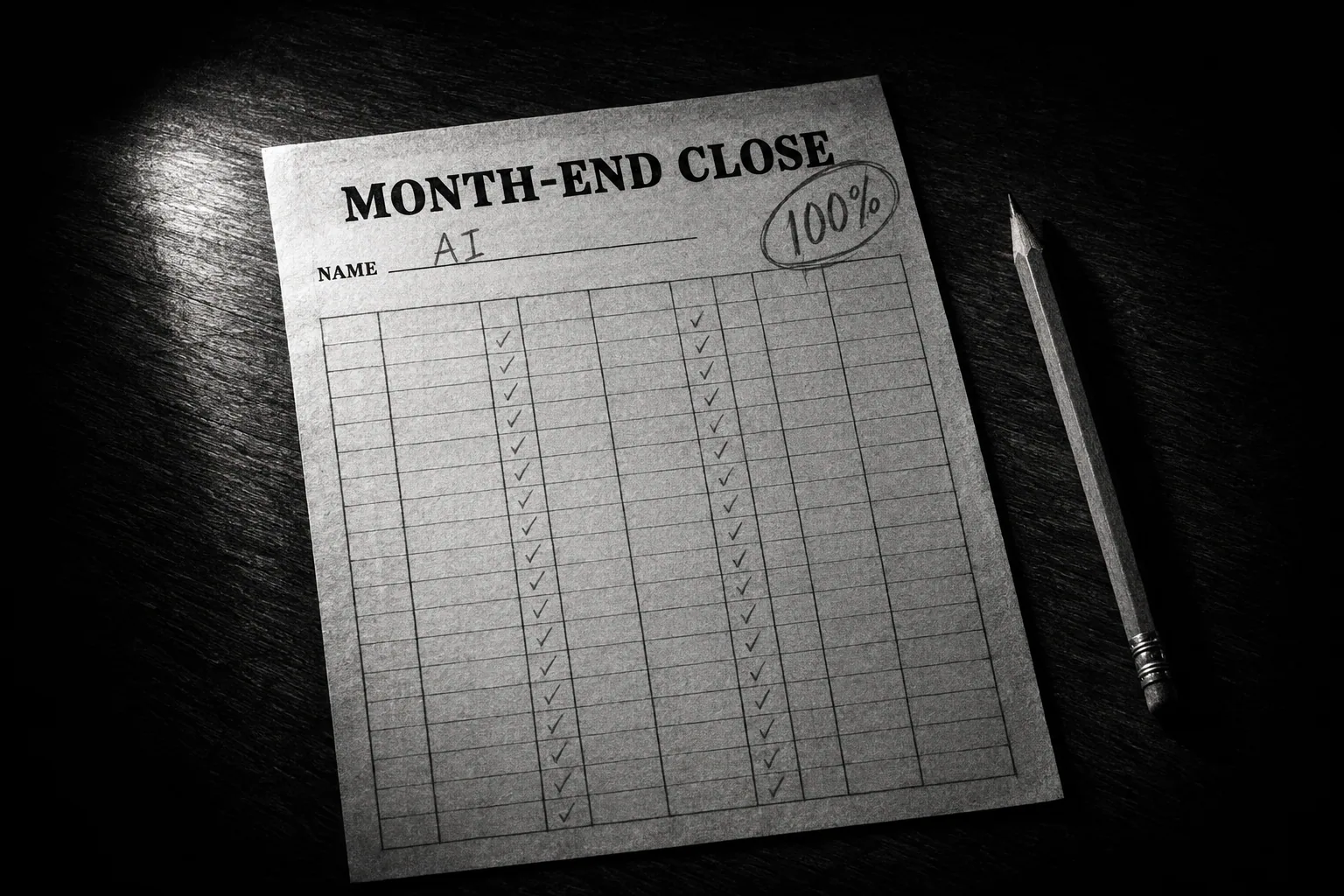
In a Mercor study, AI outscored licensed CPAs on month-end close tasks

Mercor gave 12 junior accountants, all licensed CPAs, and Claude Opus 5 the same month-end close tasks: Claude alone scored perfectly, and accountants working with Claude were slower and slightly less accurate than Claude alone. The authors say the tasks tested what AI does best, not the whole job of an accountant.

What happened

On Oct 1, Mercor published Human Baselines for Benchmarks: AI Now Outperforms Junior Accountants, a research post by Aden Barton with a full paper behind it. Mercor sells expert human data and professional benchmarks to AI developers. It recruited 12 junior accountants, all US-based with an active US CPA license, averaging 5.4 years of accounting experience (the range was 3.8 to 8.0), six in public practice and six in industry. They worked through four month-end close scenarios adapted from Mercor's APEX-Accounting benchmark: dig through a company's working files, find the right numbers, do the math and deliver a table of results, with a three-hour limit per task, though most handed in before it. The same tasks went to Claude Opus 5 working alone and to accountants working with Claude. The tasks were built to stump models. Hard-to-spot requirements compound, so "a single overlooked number could produce a very low score", and the task authors expected about 30% from a junior accountant and 55% from a mid-level one.

The post's finding: "We find that on medium-length, well-defined accounting tasks, frontier AI models are now faster and more accurate than junior accountants, even the best one in our study." Claude alone scored 100% across its 20 attempts. The accountants without AI made 23 attempts, and Mercor writes: "Just eighteen months ago, the best AI models fell short of the average accountant's ~37% score." Working together did not help. Accountants with Claude were "slower and slightly less accurate than AI alone" and took about 15 times as long per task. In three of the four assisted sessions that missed a perfect score, Claude had the right figure at some point and it did not reach the final answer: twice Claude revised away from it and the accountant went along, and once the accountant overrode Claude's correct figure. Mercor puts the cost at $0.21 per rubric criterion met for Claude against $10.35 for the accountants, 49 times more, using the US median accountant wage rather than what participants were paid, and list token prices with no caching, which it calls an upper bound. The authors set the limits themselves: "These results do not mean accountants are replaceable, since our tasks ended up testing what AI is best at ... rather than the whole job of an accountant, which involves less structured tasks like client communication." Participants had "no coworkers to ask for help, no accumulated job context", and the authors write that they "considered not publishing" the results "for fear of misinterpretation." On the full 160-task APEX-Accounting benchmark, the best score on Mercor's leaderboard is 61.8%, and 58% of the tasks remain unsolved by any model.

Before

Eighteen months ago, by Mercor's account, the best AI models scored below the average accountant's roughly 37% on these same close tasks. Going through a company's working files, finding the right numbers, doing the math and handing over a table of results was work for a person, and the licensed CPAs in the study got up to three hours per task.

Now

On four well-defined close tasks, Claude Opus 5 working alone scored 100% in all 20 attempts, at a cost Mercor puts at $0.21 per rubric criterion met against $10.35 for an accountant at the US median wage. Working with an accountant did not raise the score: the pairs took about 15 times as long and were slightly less accurate. The rest of the job, from client communication to the context a person builds up at a company, was not tested.

Who it touches
  • Small CPA and bookkeeping firms that bill for month-end close work: the study's tasks came from that work, and the human baseline was licensed CPAs averaging 5.4 years in accounting.
  • Junior and staff accountants with three to eight years of experience, the range the study measured, whose well-defined close tasks are the part the model did best.
  • Service-business owners who pay a bookkeeper or outside accountant every month: a fair question for the firm is which close steps it gives to AI and how a person checks the figures.
  • Any office that has a person review AI output before it goes out: in this study, three of the four imperfect assisted sessions lost a correct figure between the first answer and the final one.
What it means for the business

The finding to carry into Redwater's builds is the part where people and AI worked together. In three of the four assisted sessions that missed a perfect score, the right figure appeared and was lost: twice the model revised away from it and the accountant went along, once the accountant overrode it. Redwater has built an AI bookkeeping step that sorts bank transactions, applies the ones the model is confident about and puts the rest in an Unsure list for a person to accept or change. This study is a reason to make that review screen show what a figure was, what it changed to and the document it came from, so a person checks a change against the source instead of trusting whichever answer came last.

For talks and content it is a sourced proof point that carries its own limits, and the honest version is the one to tell: the authors themselves say the results "do not mean accountants are replaceable." Bookkeepers and small CPA firms are both an owner type Redwater speaks to and a referral partner it looks for, and the question this study hands them is concrete: which steps of the close are well-defined enough to give a model, and who checks a changed figure against the file. Mercor's cost figures are per rubric criterion at a median wage, not a bookkeeping bill, so no pricing claim should be built on them.
Church & Tech · Address to artistsDeveloping · since Sep 19Backdrop
02

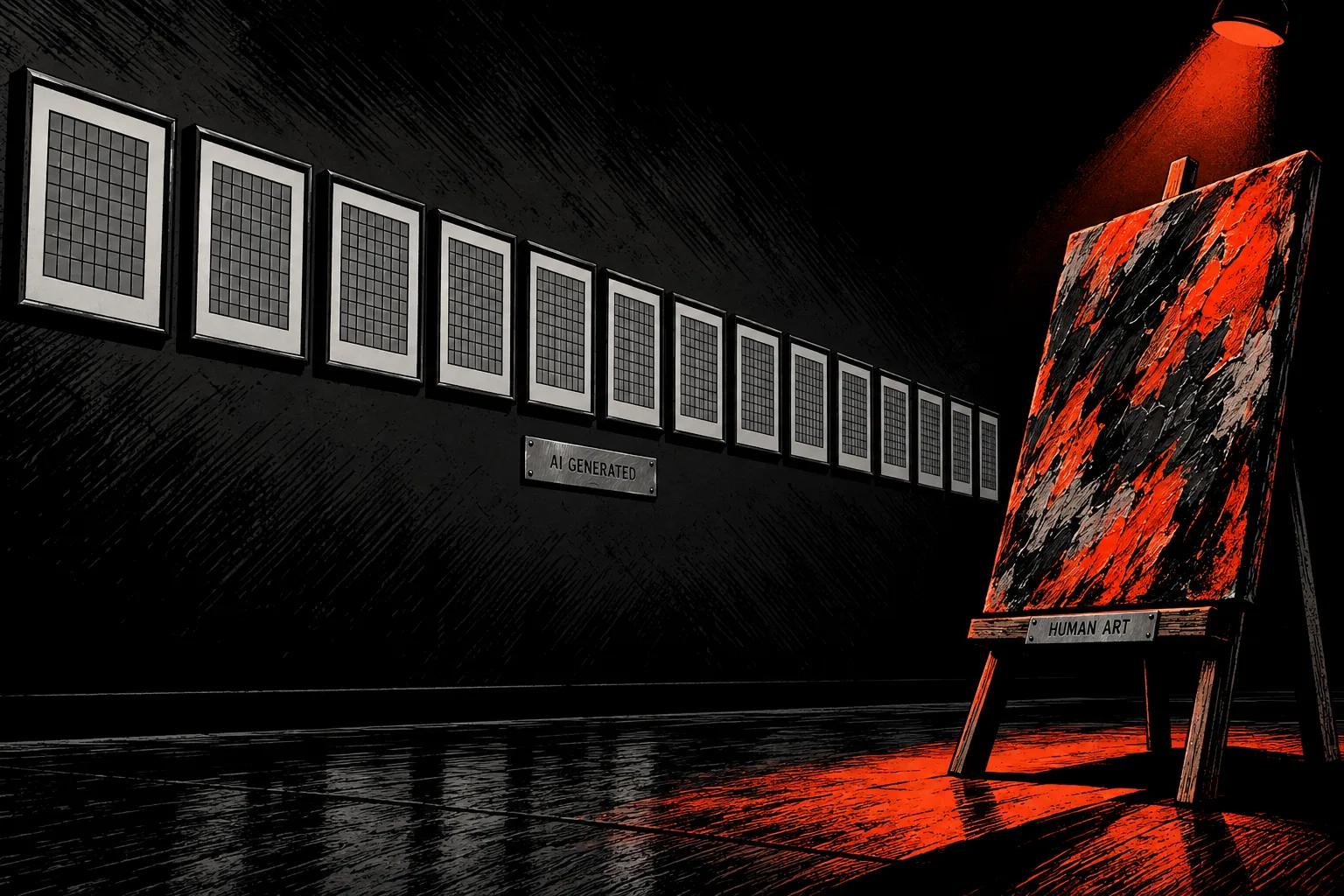
Pope Leo XIV tells artists human art and AI-generated images differ in kind

Addressing artists and curators at a Vatican meeting on Oct 2, Pope Leo XIV said that in "this age of artificial intelligence" the Church needs them, because "we urgently need to distinguish human art from what is produced by machines." He called the gap "an ontological difference" and said the Church wants to renew an alliance with artists and cultural institutions "for safeguarding what is human."

New since Sep 29

On Oct 2, Pope Leo XIV told artists and curators at a Vatican meeting that in "this age of artificial intelligence" the Church needs them, because "we urgently need to distinguish human art from what is produced by machines." He called the gap between art and machine output "an ontological difference."

What happened

On Friday, Oct 2, Pope Leo XIV addressed artists and curators taking part in "The Art of Possibility: Weaving Together," a meeting promoted by the Vatican's Dicastery for Culture and Education and held in the Consistory Hall. He told them: "the Church needs you. This is especially true in this age of artificial intelligence, in which we urgently need to distinguish human art from what is produced by machines." He said the difference between art "and what a machine can generate through statistical calculation based on millions of images created by others" is "an ontological difference," one that comes "even before an aesthetic one." In plain terms, a difference in what the thing is, before any question of how good it looks. "Algorithms lack the spark of the human," he said, quoting his own May encyclical, Magnifica Humanitas (para 122), that "authentic culture and art preserve this spark."

He also spoke about the tools people now use to find answers: "We live in the age of search engines that offer us thousands of instantaneous answers. Yet, no matter how powerful they may be, they merely return what already exists and tend to give us what we already want." He then set out the Church's response: "For all these reasons, the Church wishes to renew an alliance with artists and cultural institutions; an alliance for safeguarding what is human." Vatican News summarised the meeting as the Pope saying the Church stands with artists who can help make the Gospel understandable, especially in the age of AI. Art already appeared in the encyclical in May; this was an address to artists centred on AI.

Before

The last brief left the Pope on his Sep 28 flight home from France, telling reporters that experts' warnings of catastrophic AI risk should be taken seriously and questioning an industry case for no government regulation. Until now the thread was mostly about the dangers of AI and who should set its limits.

Now

The Pope has turned from what AI might do to what it makes. Speaking to artists, he said what a machine generates from "millions of images created by others" is a different kind of thing from human art, that telling the two apart is urgent, and that the Church wants a renewed alliance with artists and cultural institutions to safeguard "what is human."

Who it touches
  • Artists, curators and cultural institutions, whom the Pope invited into a renewed alliance with the Church "for safeguarding what is human."
  • Illustrators, designers and photographers, whose work is the kind of "images created by others" he said machines generate from.
  • Owners who put AI-made images or copy in front of customers, from a contractor's website to a shop's social posts, now that the Pope has drawn a public line between human work and what a machine generates.
  • Catholic dioceses, schools and media that have followed Rome's line on AI since Magnifica Humanitas and now have a statement on AI-made art to work from.
The Church got here first

Magnifica Humanitas, Pope Leo XIV's encyclical of May 15, 2026 (vatican.va), already gave art a place in the AI argument: paragraph 122 says "authentic culture and art preserve this spark." On Oct 2 the Pope read that line back to artists and put the machine on the other side of it: "Algorithms lack the spark of the human." The encyclical stated the principle. The address applies it to one specific practice, generating images "through statistical calculation based on millions of images created by others," and turns it into a request to the artists themselves.

What it means for the business

Earlier briefs in this thread were about risk and regulation, which reach an owner slowly. This one is about something owners already do: put AI-made images and AI-written copy in front of customers. The Pope's point is that a machine's output and a person's work differ in what they are, before any question of quality. We hold a working version of that line already. An AI image can illustrate an idea, but it never passes itself off as a real person, crew, job or result. A before-and-after, a crew shot or a finished job is a real photo, or it does not run.

That gives owners a plain rule to borrow and gives us an outside voice for it in a walkthrough: use AI for drafts, illustrations and the repeatable work, and keep the proof human and real. His line on search engines, that however powerful they are they "merely return what already exists and tend to give us what we already want," also describes the risk in AI-written marketing: copy that sounds like every competitor's. The owner's own jobs, photos and words are what set a business apart. For the faith lane, the thread moves from safety to craft, with exact lines from the Pope's own text.

02

By beat

Everything else worth knowing this week, grouped by beat, each with a link to the original.

Most relevant first
AnthropicOct 1

Anthropic launches mods, small add-ons that change how Claude Code works

Anthropic introduced mods on Oct 1: small pieces of TypeScript code that can rewrite a prompt, add new interface elements, replace a built-in Claude Code feature or add a new one. They ship inside plugins for the Claude Code command line and desktop app, and users can write one themselves or ask Claude Code to write, install and reload one during a session. Anthropic's own guide warns that a mod is code running on the user's machine, to be installed like any package and only from people they trust; on Team and Enterprise plans a built-in security mod loads first and admins control which mods load.

The Wall Street Journal, via CBS NewsOct 1

OpenAI dismisses three researchers it says mishandled sensitive information

The Wall Street Journal first reported that OpenAI fired three researchers for alleged misconduct, including sharing confidential company information with a third-party AI-safety organization. An OpenAI spokesperson told CBS News that the company's investigation confirmed they "mishandled sensitive information outside established company procedures, violating our policies and breaking the trust essential to our work." OpenAI has not disclosed what was shared, which organization received it, or who the three researchers are.

Anthropic Help CenterOct 1

Claude work that follows a new design, deck or doc counts half against usage limits until Oct 15

From Oct 1 to Oct 15 (ending 11:59 PM PT), creating or editing an artifact in Claude or Claude Cowork, such as a design, deck or doc, makes part of the work that follows use 50% less of the five-hour session limit, per Anthropic's Help Center. It applies automatically on Pro, Max and Team plans, not Free or Enterprise, and covers the next 10 messages in a chat or about 45 minutes of work (up to 80 steps) in Cowork. Weekly limits do not change, and Claude Code, the API, and Google Docs, Sheets or Slides work through the connector are excluded.

Sam Altman and Tibo Sottiaux, OpenAI, on XOct 1

OpenAI says GPT-6.1 Sol is back to normal speed and announces a reset for paid ChatGPT accounts

Sam Altman wrote on Oct 1 that GPT-6.1 Sol was OpenAI's fastest-growing model ever and "was a bit slow under load," and said it should be much better now. OpenAI's Tibo Sottiaux apologized for the slow start, said the model is back to running at expected speeds after a massive load spike in its first two days, and announced a global reset for all paid ChatGPT accounts at 10am PST on Oct 2. His post does not say what is reset; SmartScope reported it as a reset of usage limits.

Matthew Schwartz, Anthropic Science BlogOct 1

A Harvard physicist says AI models need a harness to do real science, and builds one

In a guest post on Anthropic's science blog, Harvard physicist Matthew Schwartz wrote that "Claude and GPT are good at science, but they are not scientists," and that it can take a lot of hand-holding to get work of scientific value from them. His answer is BootLoops, software for exact calculations that he calls "a kind of harness for the LLM," aimed at problems where a technique from one field solves a problem in another. It started on physics calculations and was then applied to ecology, population genetics, economics, linguistics, phylogenetics and cosmology, with human experts still steering early results that were technically correct but unremarkable toward meaningful research.

Andrej Karpathy, on XOct 2

Andrej Karpathy's advice for reading AI output: ask for a strict writing standard, or a diagram

Karpathy wrote on Oct 2 that "We'll be spending a lot more time trying to understand the outputs of language models," and shared his own tips. He suggests asking a model to explain things in ASD-STE100, a controlled language originally developed for aerospace maintenance documentation, whose strict rules for clean writing he finds more readable, or asking for 80% of the way to it as a softer version. His second tip is to ask for diagrams instead of text, which he says can be a lot easier to take in.

03 · Freelance market · State of the Upwork

Buyers asked for AI agents more often in September, and the rate kept sliding.

September is the first month since June in which the share of Upwork postings naming AI agents went up: 17.7 percent, from 15.2 in August, after falling from 18.2 in June and 16.5 in July. Mentions of Claude and Anthropic held near August at 20.9 percent, and OpenAI and GPT mentions edged up to 22.7. The median hourly rate kept falling, to $30 from $32.50 in August and $35 in June and July, and the fixed-price share slipped to 35.2 percent. One month is not a trend, but it is the first turn upward in agent requests since this panel started tracking them.

Read the September archive ↗Directions here come from shares of postings, never from raw counts, because the count of jobs captured moves with scrape coverage. September 2026 is the latest complete month.
Jobs captured
1,901
September, a count and not a trend signal
Median rate
$30
down from $32.50 in August
AI agents share
17.7%
up from 15.2% in August
Fixed-price share
35.2%
down from 37.1% in August
04

Content wellspring

Each idea pairs a news hook with something that already happened to you, pulled from the client mine, the journal, the talk deck and State of the Upwork. Ideas stay here until you send one to Post Lab. Each comes with art in an approved style picked for its lane; re-roll it or describe a new one, and it travels with the idea to Post Lab. Ideas sparked by a podcast say so.

Whiteboard marker sketch
Case study · cardnfbnignlicfbcig

The plant asks for a number. He counts the rows by hand.

The hook
Mercor published a study on Oct 1 that gave 12 licensed CPAs and Claude Opus 5 the same four month-end close tasks: dig through a company's working files, find the right numbers, do the math, and deliver a table. Claude alone scored 100%, and the study found that "humans with AI are slower and slightly less accurate than AI alone." Eighteen months ago, the best AI models fell short of the average accountant's score.
From your bank
I've just count and say, hey, out of 105, there's 27, you know, just by counting manual manual counts
client-minea6e59f81ac27
Your angle. The operations manager at an industrial inspection firm told me what happens when a plant asks how many of the repairs were caused by damage and not normal wear. The plant uses that split to charge another contractor back. He scrolls the repair log, counts the rows by hand, and reads out the tally: out of 105, there's 27. The repairs are already written down. The slow part is the counting. That is the kind of work this week's study tested: dig through the files, find the right numbers, do the math, hand back a table. On tasks like that, Claude alone scored 100%, faster and more accurate than even the best CPA in the study. The same study found that people working alongside the AI were slower and slightly less accurate than the AI alone. So if a customer asks you a question you answer by scrolling and tallying, hand that job to AI. Check its count against yours once, on a log you've already counted. After that, you set the rule for what counts as damage, and it does the counting.
intel-2026-10-02-daily-01
Neon line on dark
Failure · textnfbnlicfb

The 3-star review wasn't for what broke. It was for the silence.

The hook
Mercor published a study on Oct 1 that gave 12 licensed CPAs and Claude Opus 5 the same four month-end close tasks, and Claude alone scored 100%. The authors say that does not make accountants replaceable, because the tasks tested what AI is best at, detail-oriented instruction following, "rather than the whole job of an accountant, which involves less structured tasks like client communication."
From your bank
they disappeared on comms, things started breaking and I didn't know how to fix it, so I stopped monitoring. Apparently, they finally reached out ~1 month ago, but I had moved on to other projects. Woke up this morning to a 3 star review on poor communication.
skool-mineswipe-file #174
Your angle. Early on, I took on an hourly client. It started great. Then they went quiet, things started breaking, and I didn't know how to fix them, so I stopped checking. When they finally reached out, I had moved on to other projects. A month after that, I woke up to a 3-star review for poor communication. Not for what broke. For going quiet. That was a skill issue on my part. This week a study gave 12 licensed CPAs and Claude the same month-end close tasks, and Claude alone scored 100%. The people who ran it say that doesn't make accountants replaceable. The tasks tested detail work, not the whole job, and the whole job includes talking to the client. Your business works the same way. The more of the detail work AI picks up, the more your customers judge you on the part that's still yours: telling them where things stand. When a customer goes quiet or something breaks, send one plain message about where it stands before you move on. With the clients after that one, I set very clear expectations up front, and those relationships went great.
intel-2026-10-02-daily-02
05

Quotes worth saving

Exact wording only, always linked. Good for slides, captions and talks.

"In this era of artificial intelligence, it is becoming urgent to distinguish human art from what machines produce. There is an ontological difference, even before an aesthetic one, between art and what a machine can generate through statistical calculation based on millions of images created by others."
Pope Leo XIV, on X (@Pontifex) · Oct 2, 2026@Pontifex
"i agree with this sentiment but it’s a category error. there’s no such thing as what machines produce, only what humans produce with machines"
Dan Shipper of Every, on X · Oct 2, 2026@danshipper
"Each person works differently, so there's no reason why everyone should have an identical Claude experience."
Boris Cherny, on X, about Claude Code mods · Oct 1, 2026@bcherny
"Also, 6.1 Sol was our fastest-growing model ever, and was a bit slow under load. Should be much better now!"
Sam Altman of OpenAI, on X · Oct 1, 2026@sama
06

Coming up

Dates worth planning content around.

Oct 15Last day of Anthropic's artifact usage promotion, which ends at 11:59 PM PT. Until then, on Pro, Max and Team plans, work that follows creating or editing an artifact in Claude or Claude Cowork uses 50% less of the five-hour session limit.AI & Claude
07

Sources

What this brief watched and what it cited. Posts and podcasts are leads; every fact in a top story was checked at the sources listed under it.

X accounts watched54
Data1

Our monthly report on the Upwork automation market. Read-only from its database.

Cited in the top stories9 links
Linked from the beat cards9 cards
Daily brief · Friday, Oct 2 · built Oct 2, 8:51 AM by /intel-brief · covers Oct 1 to 2, 202654 X accounts · 0 podcast episodes · State of the Upwork
DemoReal posts. Nothing publishes.Reset