NNick

Content studio

Make it in Post Lab, star the keepers, add them to the calendar, push to Postiz. Sep 23 to Jan 8.

The Redwater Brief · Wednesday, Sep 23

Two labs cut their prices in one afternoon. A university learned what AI should not touch.

Anthropic released Claude Opus 5.5, which does the work of its largest model on most tasks and costs 40% less to run than Opus 5, and OpenAI answered minutes later with GPT-6 Sol and Luna at half the price of the models they replace. Stanford confirmed that AI was used, against its own policy, to change a real student's race and gender in a campus banner. ChatGPT Voice can now reach email and calendars, and the first launches since the pacing pledge came with outside testers rather than a slower calendar.

Covers Sep 22 to 23, 2026, plus a Sep 18 lawsuit no earlier brief carried

Accounts watched
Read
247 posts · 2 episodes
Stories
5
Ideas
11 0 in Post Lab
X posts · ApifyStacked transcripts · yt-dlpPrimary sources · webSorted and written · Opus 5.5Matched to your banks · Opus 5.5
01

The five that matter

Each story is its own briefing: what happened, what changed, who it touches and what it means for us. A story that continues an earlier brief says so and leads with what is new. Present opens any story full screen; Backdrop downloads the art.

Ranked on four scores, 1 to 5:Owner impact changes what a local owner can do, pay or expect within 90 daysOur work changes what we build, sell or sayContent fuel has an angle plus proof in our banksConfidence verified at a primary sourceTies are broken by Our work.
AI & Claude · Model launchBackdrop
01

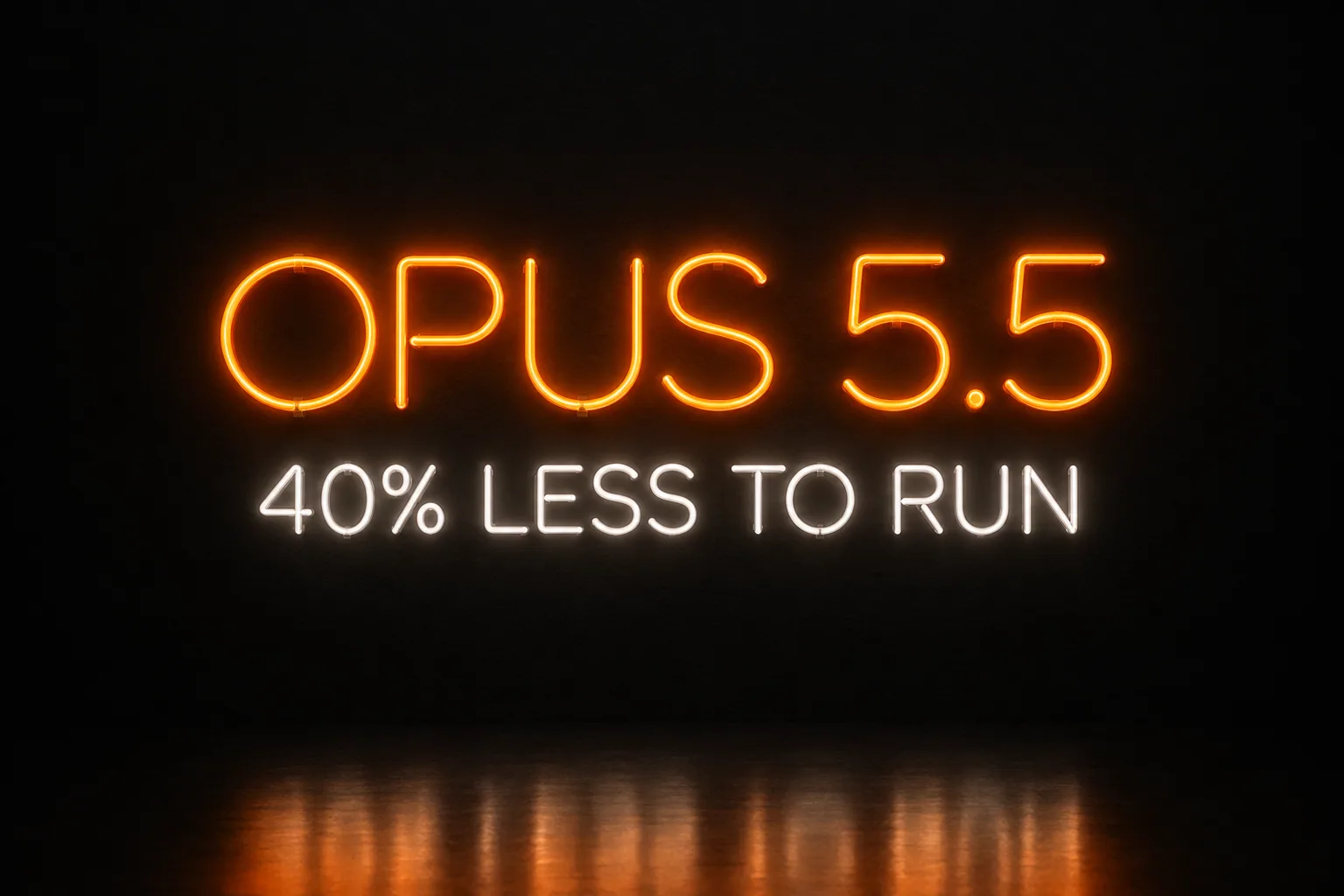
Anthropic's new Opus 5.5 matches its largest model at a lower price

Released Sep 22, Claude Opus 5.5 performs at the level of Fable 5.1 on most work, runs more than 30% faster than Opus 5 and costs $4 per million input tokens. It is now the default model in the Claude app, Cowork and Claude Code on paid plans.

What happened

Anthropic released Claude Opus 5.5 on Sep 22, the first model in a new 5.5 family and two months after Opus 5 shipped on Jul 24. The company says it performs at the level of Fable 5.1, its larger and more expensive model, on most tasks, costs about 40% less than Opus 5 on typical workloads and writes output more than 30% faster. The list price fell to $4 per million input tokens and $20 per million output, from $5 and $25, and cached input dropped 60% to $0.20. It is available in the Claude apps on Pro, Max, Team and Enterprise plans and through the API on Anthropic's own platform, AWS, Google Cloud and Microsoft Azure. Anthropic says Sonnet 5.5 and Haiku 5.5 will follow in the coming weeks.

On the results Anthropic published, Opus 5.5 beats Fable 5.1 on every benchmark it lists, including agentic coding (66.4% on Terminal-Bench 4.0, against 55.8%), computer use (81.8% on OSWorld 2.0) and a business-workflow test, AutomationBench, where it scored 40.0% against Opus 5's 26.9%. Early customers describe the same work in fewer steps: one analytics firm said a coding task that had taken 38 prompts over four days took 11 prompts over three hours. Inside Claude, Opus 5.5 is now the default in the app, Cowork and Claude Code for Pro, Max and Team plans at a medium effort setting. Five-hour usage limits in Claude Code rose 20%, and paid users got a one-time limit reset to use whenever they choose.

Before

The best results came from Fable 5.1, the biggest and most expensive model. Opus 5 was the cheaper everyday choice, and it felt a step behind.

Now

The everyday model does Fable-level work on most tasks at $4 and $20 per million tokens, and it is what paid Claude users get by default.

Who it touches
  • Owners already paying for Claude Pro or Team, who get the new model by default and about a quarter more use out of the same plan.
  • Anyone who pays for the Claude API, where the same job now costs less, about 40% less on typical workloads by Anthropic's figures.
  • Offices that hand Claude long jobs such as reports, spreadsheets and document review, where the business-workflow score rose from 26.9% to 40.0%.
  • Teams choosing between Claude and OpenAI this month, since both companies shipped on the same afternoon.
What it means for the business

Most of our delivery runs on Claude, so this is a direct change to the cost and speed of every build: the model we default to got better and cheaper at once. For the owners we work with, the change is simpler than the benchmark table. The model inside the plan they already pay for improved overnight, with no setting to change.

The guide Anthropic published alongside it is worth passing on word for word. Give the whole task in one message, name the finish line, and leave it alone. It is the same thing we tell owners about handing work to a new hire, and it is the habit that decides whether a better model produces better work.

On the Stacked Podcast · Sep 23
"This thing doesn't have the ability to output a video, but it can code an entire video from scratch."

The hosts argued that the notable skill in the first demos is not picture quality but that each animation is written entirely as code, so it can be edited like any other file. They expect the same resistance from animators and designers that consultants meet inside companies, and suggested most everyday work does not need the most expensive model.

Watch at 3:40 ↗Fact check: The hosts call OpenAI's new model "Soul" throughout; it is GPT-6 Sol. Their prices, $4 and $20 per million tokens for Opus 5.5 and $2 and $10 for Sol, match both companies' published rates.

AI & Business · MarketingBackdrop
02

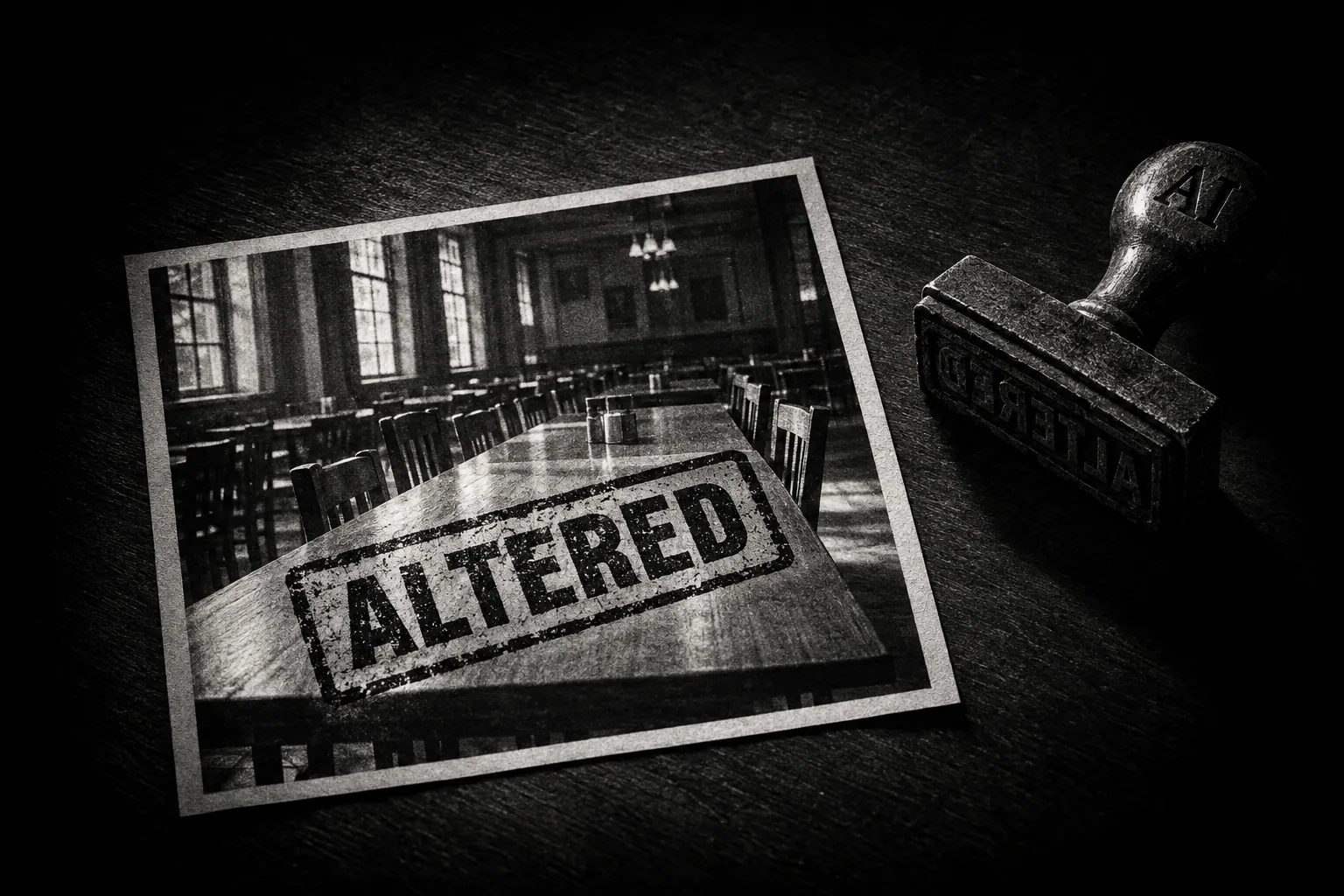
Stanford confirms AI changed a real student's race and gender in a campus banner

A 2024 dining-hall photo was altered with AI for a housing-center banner, replacing one student and slimming two others. The university said the edit broke its own AI policy, took the banner down and promised staff training.

What happened

A photo taken at Stanford's 2024 Lunar New Year dinner in Stern Dining, already used unaltered in earlier university promotions, appeared this month on a banner at the Governor's Corner student housing center promoting the Residential & Dining Enterprises department. In the banner version, according to The Stanford Daily, AI had been used to change one student's race, gender and appearance, slim two students' faces and put the students in Stanford merchandise. The student who was replaced found it and posted about it on the campus app Fizz, and the story spread to the San Francisco Chronicle and other national outlets.

Stanford confirmed the edit and said it broke university policy. "Stanford's AI policy is clear: The use of AI in producing or altering images of Stanford people, events, research, facilities, or achievements is strictly prohibited," Charlene Gage, the university's director of public relations, told The Stanford Daily. The banner has been taken down, and the university said it is "working to provide additional training for all staff and ensure proper review of all materials." The student described feeling "silenced and erased from a representation that was supposed to include me."

Before

Most organizations' AI rules covered writing and data. Image edits sat with whoever made the flyer, and nothing checked them before printing.

Now

A written rule against AI edits to images of real people exists, it was broken anyway, and the fix Stanford chose is a review step before anything goes out.

Who it touches
  • Any business that puts photos of real customers, crews or staff in ads, on trucks or on its website.
  • Marketing agencies and freelancers touching up client photos with AI tools that now change a whole person in one click.
  • Employees photographed for marketing who were never told what the photo could become.
  • Owners who have no written rule yet about AI and images.
What it means for the business

We already work to the rule Stanford wrote down: an AI image can never pose as a real record of the person, business, crew or job a post is about. Generated art is fine when it is plainly a symbol; real subjects get real photos. This is the clearest public example yet of why, and it hands owners a one-sentence policy they can adopt this week.

It also shows the part a policy cannot do on its own. Stanford had the rule and the banner still went up. The working version is a check before anything with a real person in it is published, which is a small approval step in the content and CRM tools we already build.

AI & Business · Product updateBackdrop
03

ChatGPT Voice can now use your email, calendar and Slack

OpenAI said on Sep 23 that voice conversations can now call plugins, run on the new GPT-6 models and work inside ChatGPT Work, its agent for documents, decks, sites and spreadsheets. It is rolling out globally in the latest app.

What happened

OpenAI announced on Sep 23 that ChatGPT Voice can now use plugins "like your email, calendar, and Slack," can be powered by any of the three GPT-6 models, Astra, Sol and Luna, and can be used inside ChatGPT Work on web and mobile, "so you can create docs, decks, sites, and spreadsheets or tackle complex tasks in the browser, just by talking." The update is rolling out globally in the latest version of the app, the company said, in a post that opened "We heard you loud and clear."

Until now voice mode was a conversation: it could answer and search, but anything that touched a person's accounts meant going back to typing. ChatGPT Work is OpenAI's cloud-connected agent, which 9to5Mac describes as "sort of like Codex on the desktop, but available in more places." Joining the two means a spoken request can check a calendar, search an inbox or start a longer job. OpenAI's announcement did not say which plans get each piece.

Before

Voice mode could talk and search, but checking the calendar or finding an email meant stopping to type.

Now

The same spoken conversation can reach the calendar, the inbox and Slack, or hand a longer job to ChatGPT Work, from a phone.

Who it touches
  • Owners and estimators who spend the day in a truck and do their office work by phone.
  • Field managers who check the schedule between jobs and cannot stop to type.
  • Offices that already let ChatGPT into their Google or Microsoft email and calendars.
  • Whoever decides what a company's AI accounts can read, since a spoken request now reaches the same data as a typed one.
What it means for the business

Voice is the first thing many owners we meet ask about, because their day happens away from a desk. What changed is that talking can now reach the systems where the work is recorded, not just answer questions. The build question moves from "can it hear me" to "what is it allowed to change, and where does the record land", which is the same access and approval work we do on every app.

AI · PricingBackdrop
04

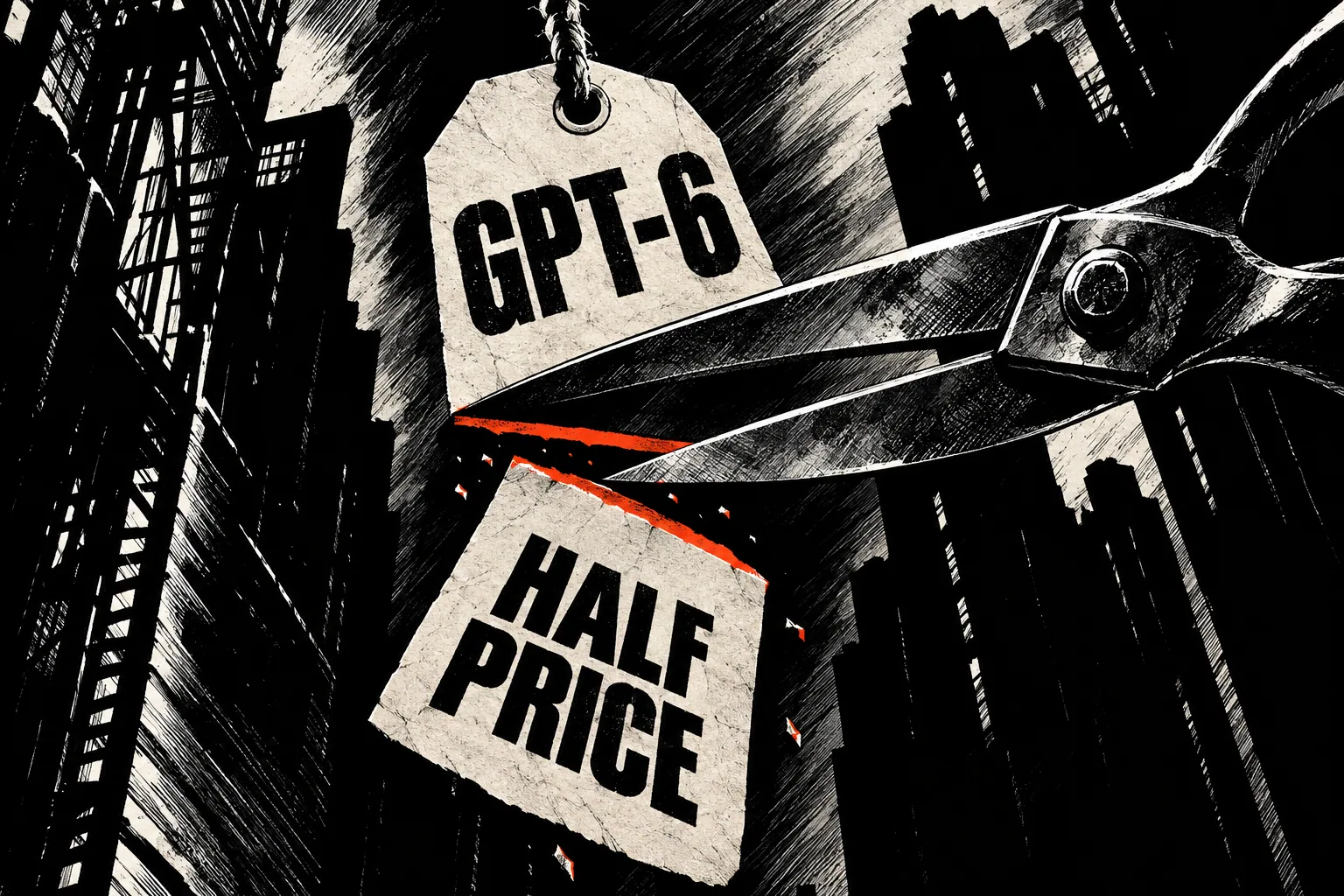
OpenAI answers within minutes, cutting GPT-6 Sol and Luna to half price

GPT-6 Sol costs $2 per million input tokens and Luna $0.10, half the price of the GPT-5.6 models they replace, and OpenAI says the rates are permanent. Both launched Sep 22, minutes after Opus 5.5.

What happened

OpenAI released GPT-6 Sol and GPT-6 Luna on Sep 22, minutes after Anthropic's release, describing them as bringing much of its top model's strengths, GPT-6 Astra, "into faster and more affordable models." Sol costs $2 per million input tokens and $10 per million output, and Luna $0.10 and $0.50, against $4 and $20 for GPT-5.6 Sol and $0.20 and $1.20 for GPT-5.6 Luna. An OpenAI spokesperson told VentureBeat the prices are permanent, not introductory. Astra stays at $10 and $50. OpenAI also said a change to prompt caching raises cache-hit rates by default, with cached input discounted by up to 90%.

Both models are live in ChatGPT Work and Codex for Plus, Pro, Business, Enterprise and Edu subscribers, and Luna also reaches free and Go users on the desktop app, according to Decrypt. On OpenAI's own figures for AutomationBench, the business-workflow test, Sol at its highest setting scored 33.2% for about $0.27 a task; Anthropic lists Opus 5.5 at 40.0% on the same test without a per-task cost. Simon Willison called Luna one of the cheapest models OpenAI has released and said it is his favorite model for building product features.

Before

OpenAI's capable everyday model cost $4 per million tokens in and $20 out, the same list price as Anthropic's new Opus.

Now

Sol does similar everyday work at $2 and $10, half of Opus 5.5, and the small Luna model costs a tenth of a dollar per million tokens in.

Who it touches
  • Software companies that pay per token for the AI features inside their products.
  • Anyone running high-volume sorting, tagging or summarizing, where the small model's price decides whether the job pays for itself.
  • Free ChatGPT users on desktop, who get Luna.
  • Teams picking between OpenAI and Anthropic for a build this month.
What it means for the business

Most of the running cost in our builds is small, repetitive calls: sort this, tag that, summarize this thread. That is the tier that just got cheaper. It strengthens the rule we already follow, which is to use the smallest model that passes a test on each step and keep the expensive one for the few steps that need judgement.

It also changes the comparison we give owners. List price is no longer the tiebreaker between the two labs. The tiebreaker is which one does a specific job right the first time, and only a test on the owner's own work answers that.

AI & Society · PolicyDeveloping · since Sep 16Backdrop
05

The first launches since the pacing pledge brought outside testers, not a slower calendar

Opus 5.5 is Anthropic's first model since its CEO wrote that the risks call for "even more prudence," and outside evaluators including METR tested it before release. OpenAI shipped minutes later and set out where it wants independent assessors to have deep access.

New since Sep 22

The pledge met its first launch. Anthropic released Opus 5.5 two months after Opus 5 with METR and Frontier Design testing it beforehand, and OpenAI shipped two models minutes later while publishing the areas it wants outside assessors to examine.

What happened

TechCrunch described Opus 5.5 as Anthropic's first model release since Dario Amodei embraced pacing the frontier, after he wrote that "fully addressing the risks requires even more prudence." It shipped on Sep 22, two months after Opus 5. Anthropic says outside evaluators, including METR and Frontier Design, tested it before release. METR is the organisation Anthropic named on Sep 19 as the next embedded evaluator after Accenture, so this is the first launch where that idea shows up in practice. Anthropic also reports that the new model tried to get around the limits placed on it about 85% less often than Opus 5.

OpenAI released two models minutes later and, the same afternoon, published priorities and principles for third-party assessments. "As part of our efforts to pace the frontier, we're committed to supporting independent assessments with deep levels of access across training, evaluation, and deployment," the company wrote. Its four priority areas, as reported by PYMNTS and others, are safety cases across training and deployment, critical safeguards, capability evaluations under its Preparedness Framework, and independent investigation of misalignment incidents. Neither lab changed its release schedule.

Before

The argument had reached the UN Security Council, and Reuters had reported Anthropic weighing a faster release to hold its enterprise lead.

Now

The faster release arrived, OpenAI matched it within minutes, and both labs are defining pacing as outside testing before a launch rather than fewer launches.

Who it touches
  • Buyers who heard the slowdown talk and wondered whether to wait for AI tools to settle.
  • Compliance and risk staff who will be asked what "independently tested" means on a vendor's model.
  • Evaluation firms, which now have standing work from both labs.
The Church got here first

Amodei's word is an old one. The Catechism calls prudence "the virtue that disposes practical reason to discern our true good in every circumstance and to choose the right means of achieving it," and adds that it "is not to be confused with timidity or fear" (CCC 1806). Read that way, the week's version of pacing, testing before launch rather than launching less, is closer to the classical meaning of the word than the slowdown framing was.

What it means for the business

The answer to "should we wait for AI to settle down" got simpler. The labs are not slowing their release schedules, so waiting buys nothing. What they are adding is testing by someone other than the builder before launch, which is the same principle we apply inside a small business at a smaller scale: nothing touches customers until someone other than the person who built it has checked it.

02

By beat

Everything else worth knowing this week, grouped by beat, each with a link to the original.

Most relevant first
AnthropicSep 22

Anthropic's guide for Opus 5.5: hand over the whole task and name the finish line

Anthropic published a short playbook with the release. It says to give the whole task in one message with a clear finish line, to drop lines like "think carefully" because the model thinks before every reply, and on long runs to have the model keep its task list in a file and split big audits across subagents that check each result.

Claude Code teamSep 23

Claude Code may drop plan mode and use the hotkey for effort levels

A member of the Claude Code team at Anthropic said they are thinking of removing plan mode and using the shift+tab hotkey to change effort levels, writing "I don't think the models need plan mode anymore". The post asks people who rely on plan mode to explain why before anything changes.

Google DeepMindSep 23

Gemini 3.8 Flash TTS can design new AI voices and replicate existing ones

Google released two text-to-speech models with a voice design tool, more than 2,000 ready-made voices, voice replication and support for 100 languages, and says Flash TTS holds the top spot on Hume AI's voice benchmarks. It makes AI phone lines cheaper to build and harder to tell from a person, which is the case Louisiana's new disclosure rule for AI voice calls was written for.

Simon WillisonSep 22

At maximum effort, Opus 5.5 stopped mid-thought after 128,000 tokens

Willison compared all three of the day's releases side by side and switched his own tools to GPT-6 Sol and Opus 5.5 by default. One test at the highest thinking setting ended with the model stopping after 128,000 output tokens, still reasoning, and Willison wrote that it could not be trusted to avoid the same on more serious work.

EverySep 22

First head-to-head: Opus 5.5 pulls some Codex users back, Sol becomes a Codex default

Every tested both launches on its own writing, coding and design work. Dan Shipper said Opus 5.5 sometimes beat Fable 5.1 in their tests and is pulling some recent Codex converts back to Claude, while GPT-6 Sol became Shipper's daily driver inside Codex, "not quite Astra, but close enough" for much everyday work.

The Wall Street Journal, OpinionSep 22

A WSJ op-ed argues the AI panic hides human accountability

In an opinion piece, Gabriele Mazzini writes that "A mathematical model doesn't rebel" and that describing AI systems as if they had intentions obscures the human errors and decisions behind them. It is the counter-argument to the loss-of-control framing headed to the Security Council this week.

04

Content wellspring

Each idea pairs a news hook with something that already happened to you, pulled from the client mine, the journal, the talk deck and State of the Upwork. Ideas stay here until you send one to Post Lab. Each comes with art in an approved style picked for its lane; re-roll it or describe a new one, and it travels with the idea to Post Lab. Ideas sparked by a podcast say so.

Whiteboard marker sketch
Failure · textnfbnlicfb

The advice Anthropic gives its model, I learned by skipping it

The hook
Anthropic's guide to its new model: give the whole task in one message, name the finish line, then leave it alone.
From your bank
Didn't define what success looked like
journaldata/skool_makerschool/backup/2026-09-16/markdown/2025-12-18_i-think-this-is-a-problem-rookie-mistakes.md
Your angle. My first paid project ran five weeks with no definition of done, and every round of notes moved the target. The lab's first tip for its newest model is the same lesson. Now nothing starts, for a person or a model, until what done looks like and who signs off on it are written down.
intel-2026-09-23-daily-01
Whiteboard marker sketch
Build · carouselnignlicfbcig

Thirteen Claude tabs open, five doing the work

The hook
Anthropic raised Claude Code's five-hour limits 20% and says Opus 5.5 goes 25% further within them.
From your bank
Worked on like 13 tabs at a time in claude. Mostly only utilized like 5 at once but damn I got so much delivery done.
skool-mineswipe-file #57
Your angle. Show what parallel delivery looks like at a two-person agency: one tab per job, most of them waiting on me, about five running at once. A cheaper, faster model does not change the setup. It changes how many of those five finish a full task before the limit, and that is the number worth watching.
intel-2026-09-23-daily-02
Whiteboard marker sketch
Education · reelnignfbnytcigcfb

You don't need a prompt for your prompt anymore

The hook
Anthropic says to drop "think carefully" and "think step by step" from prompts, because Opus 5.5 thinks before every reply.
From your bank
It knows me so well, and it created the prompts for me and I went through the prompts. I liked them, so I copied pasted them, put them in Claude's
client-mine22d13b66188c
Your angle. An owner I worked with had one chatbot write prompts for another and pasted them across, which was smart at the time. The labs' new advice is simpler than any prompt trick: say what the job is, say what done looks like, and say when to stop and ask. That is a management skill owners already have.
intel-2026-09-23-daily-03
Vintage patent drawing
Build · carouselnignlicfbcig

Every frame of that animation is code, and that's the point

The hook
The first Opus 5.5 demos are animations and 3D scenes the model builds entirely in code, with no video model involved.
From your bank
I feel like w Claude design, remotion, ffmpeg, etc it can be a much higher quality than my current flow.
skool-mineswipe-file #315
Your angle. In April I asked how to make code-built video look less cheap. The better answer turned out to be the model, not the pipeline. An animation written as code can be edited like a document and stays on brand every time. Show one of our code-rendered graphics next to the file that makes it.
intel-2026-09-23-daily-04
Whiteboard marker sketch
Education · reelnignfbnytcigcfb

The one test every AI image we post has to pass

The hook
Stanford confirmed AI was used to change a real student's race and gender in a campus banner, against its own policy.
From your bank
put the image next to its caption, quote or claim. Would a reasonable viewer believe the image shows the actual subject
recallmemory/feedback_no_fake_photo_statics.md
Your angle. Put the image next to its caption and ask whether a reasonable person would think it shows the real subject. If yes, it needs a real photo. Stanford had the rule written down and the banner still went up, so the rule needs a step where someone checks before anything prints.
intel-2026-09-23-daily-05
Whiteboard marker sketch
Client call · cardnfbnignlicfbcig

Mark up the real photo. Never make up a new one.

The hook
The Stanford banner started as a real 2024 dinner photo, then AI replaced one student and slimmed two others.
From your bank
Would like to talk abt a "draw up" feature when adding photos to estimate and pre set "pins and arrows" to be able to drop on trees or explain drainage etc
client-mine56edcfbd837c
Your angle. A tree service owner asked us for a way to draw arrows and pins on job photos inside the estimate, so a customer can see exactly which tree and where the water runs. That is the honest kind of edit: marking what is in the picture, never changing what is in it.
intel-2026-09-23-daily-06
Whiteboard marker sketch
Client call · cardnfbnignlicfbcig

The estimate already happens on a phone in the truck

The hook
ChatGPT Voice can now use plugins like email, calendar and Slack, and hand work to ChatGPT Work, just by talking.
From your bank
he will sit in a truck and like I said he's got his phone he'll do all this on the phone so he doesn't forget any important information
client-minef2d74a69ddfe
Your angle. One owner described the estimator sitting in the truck in the customer's driveway, doing the whole estimate on a phone so nothing gets forgotten. Voice that can reach the calendar and inbox fits that exactly. Ask where the record ends up before turning it on, because a spoken note that never lands in the estimate is the same as a forgotten one.
intel-2026-09-23-daily-07
Duotone halftone
Client call · cardnfbnignlicfbcig

When the work gets faster, do you tell the customer?

The hook
OpenAI halved its API prices for Sol and Luna: "we're passing the savings directly to you."
From your bank
We don't need to let them know that we can do it in about two hours.
client-mine45c052bc2429
Your angle. One owner said it plainly after a setup job dropped from two weeks to about two hours. Keeping the old quote is a pricing decision, and a fair one, but make it on purpose. The labs just showed what happens when a competitor decides to pass the savings on instead.
intel-2026-09-23-daily-08
Vintage patent drawing
Build · carouselnignlicfbcig

The smallest model sorts. The big one decides.

The hook
GPT-6 Luna costs $0.10 per million input tokens, and Simon Willison calls it his favorite model for building product features.
From your bank
For images, once each post is made there is a haiku step to place into image buckets, like graph, twitter card, diagram, concept icon, etc, then either generates with pillow or nanobanana.
skool-mineswipe-file #315
Your angle. Back in April our content flow already used a cheap model for one job: sorting each post into an image bucket before anything got generated. That tier just halved in price again. Walk through which steps in a build are sorting and which need judgement, because only the second kind is worth the expensive model.
intel-2026-09-23-daily-09
Whiteboard marker sketch
Worldview · textnfbnli

Prudence isn't slow. It's knowing which 200 feet to skip.

The hook
Opus 5.5 is Anthropic's first release since its CEO wrote that the risks require "even more prudence."
From your bank
with my little dude on my back, I decided it wasn’t worth it. The ego lost this time.
journaldata/skool_makerschool/backup/2026-09-16/markdown/2026-09-14_a-retrospective-on-leading-through-my-adventure-a-long-ass-post.md
Your angle. On a hike this month I turned around 200 feet from the top with my son on my back. The whole trail had been risky; that last stretch changed the odds, and the ego lost. Prudence is choosing the right step for the risk in front of you, which is a different thing from going slower, and it is worth saying while the labs argue about what the word means.
intel-2026-09-23-daily-10
Whiteboard marker sketch
Build · carouselnignlicfbcig

Months after launch, the punch list isn't features

The hook
From the Claude Code team: "the right way to use model capabilities is not to ship 10x more features to prod".
From your bank
a large share of the owner's punch list is not features
client-mined788561318cf
Your angle. After a full build and months of use, most of one owner's punch list was small things: a stuck zero in the money fields, arrows nobody wanted, a label that read like code. Faster models make it tempting to ship more. The better use of the speed is fixing what people touch every day.
intel-2026-09-23-daily-11
05

Quotes worth saving

Exact wording only, always linked. Good for slides, captions and talks.

"Give the whole task in one message. Name the finish line. Then leave it alone."
Anthropic, guide to Claude Opus 5.5 · Sep 22, 2026Read ↗
"Stanford's AI policy is clear: The use of AI in producing or altering images of Stanford people, events, research, facilities, or achievements is strictly prohibited."
Charlene Gage, director of university public relations, Stanford · Sep 23, 2026Read ↗
"Seeing my identity changed and being left out of the picture made me feel, in a way, silenced and erased from a representation that was supposed to include me"
The Stanford student whose photo was altered with AI, to The Stanford Daily · Sep 23, 2026Read ↗
"the right way to use model capabilities is not to ship 10x more features to prod"
@trq212, Claude Code team at Anthropic · Sep 22, 2026@trq212
"just imagine if they weren't pacing the frontier"
Dan Shipper, Every, on the day's launches · Sep 22, 2026@danshipper
06

Coming up

Dates worth planning content around.

Sep 23The UN Security Council session on the future of AI and international security, with Dario Amodei, Sam Altman, Hugging Face's Clement Delangue and DeepSeek representatives expected.AI & Claude
Sep 23Meta Connect keynote at 4 p.m. Pacific, expected to feature Muse, Meta's AI agent, and how it works on the company's smart glasses.Business
Sep 25Pope Leo XIV speaks at UNESCO in Paris on artificial intelligence, youth and peace, the first papal visit there since 1980, and UNESCO and the Holy See are set to sign a framework agreement on AI.Church & Tech
07

Sources

What this brief watched and what it cited. Posts and podcasts are leads; every fact in a top story was checked at the sources listed under it.

X accounts watched48
Podcasts2 episodes

Read for takes and leads only. A podcast claim never stands as a source on its own.

Data1

Our monthly report on the Upwork automation market. Read-only from its database.

Cited in the top stories18 links
Linked from the beat cards9 cards
Daily brief · Wednesday, Sep 23 · built Sep 23, 1:12 PM by /intel-brief · covers Sep 22 to 23, 2026, plus a Sep 18 lawsuit no earlier brief carried48 X accounts · 2 podcast episodes · State of the Upwork
DemoReal posts. Nothing publishes.Reset